An address that carries weight, shared with a great many others.
A Harley Street address tells a patient something before they read a word. The catch is that the same few streets hold a great many clinics and consultants, much of the surrounding area is owned and managed by the Howard de Walden Estate, and plenty of practitioners rent consulting rooms by the session. One front door can lead to several practices, and one consultant can appear at three addresses in a week.
Websites for Harley Street clinics have to handle that: making clear who practises where and when, stopping the clinic and its consultants competing with each other on Google, and giving an international or referred patient enough verifiable detail to book with confidence. I plan the site around those problems first and the visual polish second, though both matter at this address.
What a Harley Street site has to get right.
Consultant Pages That Feed the Clinic
A page per consultant with GMC number, specialty, the days and addresses they practise from and insurers that recognise them, each linking back to the clinic's specialty and booking pages.
International Patient Pages
What to expect when travelling for treatment, how a first consultation is arranged, how fees and payment work, and language versions where you have properly translated content.
A Route for Referrers
A clear page for GPs, insurers and other referrers: how to refer, what to send, who picks it up and how to reach them, so referral letters land with the right person.
Who Is In, Where and When
Consulting days for each practitioner, the right entrance and floor, nearest stations and step-free notes, so a patient arrives at the right door on the right day.
Medical Schema
Structured data using schema.org types such as MedicalClinic and Physician, connecting the clinic to each consultant so search engines can read how they relate.
Restrained, Premium Design
Real photography of your rooms and people, generous typography and quiet colour, kept fast on a phone even with high-resolution images.
Enquiries Split by Patient Type
GA4 shows whether enquiries come from UK self-pay patients, visitors abroad, referrers or consultant-name searches, and which pages they read before getting in touch. Health details stay out of analytics entirely.
Four kinds of patient, four different first questions.
A Harley Street site rarely serves a single audience. Each of these arrives with a different question, and the site should answer it within one click.
UK Self-Pay Patients
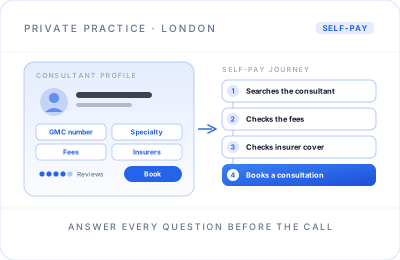
Paying directly and comparing carefully. They want the fee, what it covers, how soon they can be seen and why this consultant rather than one a few doors along.
International Patients
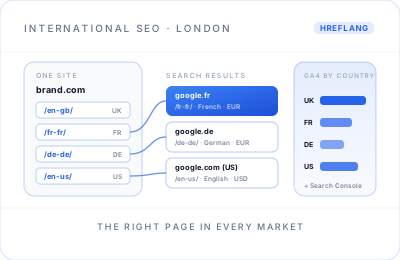
Often researching from abroad, sometimes in another language. They need travel and payment information and pages search engines can show in their country; international SEO covers hreflang and multilingual set-up.
GP and Insurer Referrals
Arriving with a named consultant or specialty and an authorisation to arrange. They need to confirm the consultant is recognised, find availability and book without ringing three numbers.
Name Researchers
They have been given a consultant's name and they check it: registration, experience, reviews and where that consultant practises. If your page isn't in those results, a directory is.
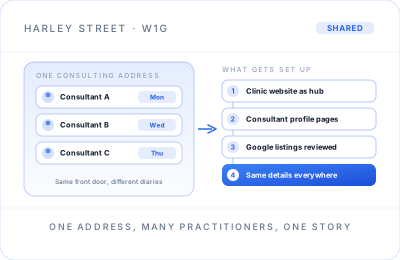
One front door, several practices behind it.
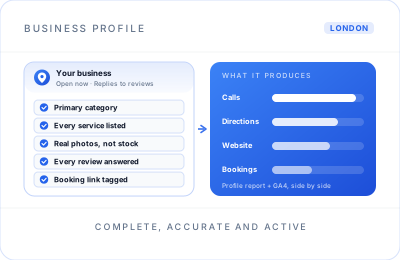
Sessional rooms are normal on Harley Street, but they cause specific problems online, mostly with Google Business Profile listings. These are the situations I check before a new site launches.
| Situation | What tends to go wrong | What I set up |
|---|---|---|
| Several practices at one address | Listings with similar names at the same address compete, and can look like duplicates to Google and to patients. | A clearly distinct practice name, and a listing only for the business that actually sees patients there. |
| A consultant practising at several clinics | Different phone numbers, addresses and hours on every directory, so no single version is trusted. | One agreed record per location, used identically on the website, profiles and directories. |
| A consultant who is the only public-facing practitioner | A separate practitioner profile competing with the practice profile for the same searches. | Google's guidelines say a sole public-facing practitioner should share one profile with the practice. I check the current version before anything is merged. |
| Several consultants at one clinic | Practitioner listings split reviews and clicks, or send patients to the homepage instead of the right consultant. | Google's guidelines allow individual profiles for public-facing practitioners. Where you use them, each one links to that consultant's page on your site. |
| A consultant leaving the clinic | Old listings and profile pages keep sending patients to rooms the consultant no longer uses. | A simple leaver checklist: update or redirect the website page and update the listing through the routes Google provides. |
Profile set-up and clean-up is covered in more detail under Google Business Profile optimisation, and consultants who work across several clinics should also read multi-location SEO. Google's rules change, so I check the current guidelines at the time of the work rather than relying on memory.
The consultant's name and the clinic's brand, pulling the same way.
On Harley Street the consultant is often the name patients search for. The clinic website and any personal site should reinforce each other rather than chase the same searches with slightly different facts.
On the clinic website
- A profile page for every consultant who practises there
- GMC number linked to the medical register
- Specialty and the procedures they actually perform
- Consulting days and every address they use
- Insurers that recognise them, kept current
- Booking for that consultant, not a generic form
On a consultant's own site
- Most useful when they practise at several clinics
- Describes the whole practice, not one location
- Links to each clinic page where they can be booked
- Written fresh, not copied from the clinic profile
- Same name, credentials and details everywhere
- Owned by the consultant, so it moves with them
If budget only stretches to one, a strong profile on the clinic site plus complete, consistent directory profiles is usually the better first step. Either can be built, and I can plan both so they link cleanly.
How patients search around W1.
Nobody can honestly promise rankings on a street this crowded. What I can do is build for the searches that actually happen here.
"Procedure Harley Street"
Searches like "knee arthroscopy Harley Street" or "private cardiologist W1". Each procedure you want to be found for needs its own page covering suitability, recovery, cost and who performs it.
The Consultant's Name
A name search puts your profile page up against hospitals, directories and old listings. Complete, consistent pages give it a fair chance of appearing and keep the booking with you.
A Very Dense Map Pack
When many clinics sit within a short walk of each other, distance separates them less. Accurate categories, a complete profile and genuine reviews carry more of the weight.
Doctify and Top Doctors
Patients often read consultant reviews on platforms such as Doctify or Top Doctors. I link those profiles from consultant pages and keep the details on them matching your site.
Clinic and Physician Markup
MedicalClinic and Physician schema, with each consultant tied to the clinic and their specialty. It helps search engines interpret the pages; it does not guarantee any special listing.
AI Assistants
Clear, factual pages with named, registered clinicians are easier for AI assistants to quote accurately. AI search optimisation covers this in more depth.
Premium, but provably factual
A prestigious look is fine; prestigious claims need evidence. These are short summaries I design around, not the full rules, so check the current guidance from CQC, the GMC, PHIN and the CMA, and the ASA for what applies to your practice.
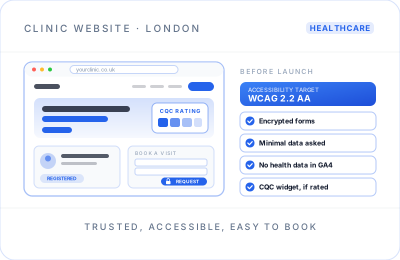
- CQC ratings. If your clinic is a CQC-registered provider and has been rated, the regulations say the rating must be displayed on your website as well as at your premises. I use CQC's official widget so it stays current. Consultants practising under another provider's registration should check how this applies to them.
- GMC guidance. The GMC says information doctors publish about their services must be factual and verifiable. On a Harley Street site that means credentials link to something a patient can check, such as the medical register, and consultant pages avoid unsupported superlatives.
- Fee information. The CMA's Private Healthcare Market Investigation Order 2014 requires consultants who see private patients to provide fee information to PHIN, the Private Healthcare Information Network. Keeping the fees on your own site consistent with it spares patients two different prices. Check PHIN's current guidance for what must be published.
- Marketing claims. Words such as "leading", "world-class" or "best" are marketing claims under the CAP Code, which the ASA applies to claims on your own website, and you need evidence for them before they are published.
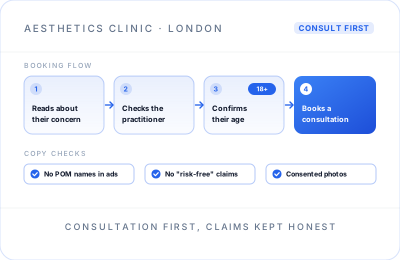
- Cosmetic and prescription-only treatments. Advertising prescription-only medicines, such as botulinum toxin, to the public is prohibited, and the ASA enforces this through the CAP Code. If your clinic offers aesthetic treatments, aesthetics clinic websites explains how I handle those pages.
The website is built to support these requirements and I flag wording that looks risky, but this is not legal or regulatory advice. Your medical director or compliance adviser should approve the final content before it goes live.
Priced as clearly as your fees should be.
A single-consultant practice or small clinic usually fits the Starter website. Multi-consultant clinics and groups get a fixed written quote after a free discovery call.
Starter Harley Street Website
From £1,999 One-off project fee. No cap on pages; scope confirmed in your written quote.- Custom design built around your own photography
- Consultant, procedure and fee pages
- Location and consulting-day details
- Referrer and international patient pages
- Schema for the clinic and its practitioners
- GA4 enquiry tracking by patient type
- 30 days of support after launch
Multi-Consultant Clinics & Groups
Price Quoted Fixed quote after a discovery call. For larger clinics and groups.- Everything in Starter
- Profiles for a large consultant team
- Several addresses or partner hospitals
- Multilingual pages with hreflang
- Booking or practice-system integration
- Google Business Profile review across listings
Domain, hosting, translation and ongoing updates are separate. For security patches and content changes after launch, see website maintenance plans.
No Harley Street clients yet. Relevant experience, stated plainly.
I haven't built a website for a Harley Street clinic yet, and I won't pretend otherwise. What I bring is adjacent and real. At GSK Consumer Healthcare I owned digital insights and analytics across 15+ brand websites; mapping 70%+ basket abandonment led to guest checkout and a mobile-first checkout rebuild, which delivered a 20% conversion lift. London FS, a regulated London mortgage broker, now runs its website, analytics, search, email marketing and CRM management, and social as one connected system, reviewed every month. Different sectors, same lesson: when a decision is high-value and carefully researched, clarity and trust decide who gets the enquiry.
Harley Street clinic website design and SEO, planned together.
Harley Street medical marketing tends to go wrong in one of two ways. Either the website looks expensive but says very little a patient can verify, or the practice spends heavily on advertising that drops visitors on a generic homepage. Both waste the credibility the address already gives you. Good Harley Street clinic website design starts from the questions a patient asks before booking and treats each answer as a page: who the consultant is, what the procedure involves, what it costs, where and when they practise, and how to book.
Harley Street SEO then builds on that structure. Procedure pages target the searches patients make, consultant pages give name searches somewhere reliable to land, and a tidy set of Google Business Profile listings stops the clinic and its consultants splitting attention at a shared address. For clinics that see patients from overseas, international SEO adds properly translated pages and hreflang so the right version appears in the right country. For steady progress in the map results, local SEO in London covers reviews, citations and categories. Ongoing SEO is priced separately, typically £499–£2,499 per month depending on scope.
If you run paid campaigns, Google Ads landing pages can use the same templates, so paid visitors see the same fees, credentials and booking options as everyone else. GA4 then shows which patient types and pages lead to consultations, without collecting health information.
I work remotely with clinics and consultants on and around Harley Street, and can meet in London by arrangement. For private practices elsewhere in London, see private healthcare website design.
Harley Street website questions.
Cost, shared-address listings, consultant sites, international patients, claims and how I work.
A Starter website for a single-consultant practice or small Harley Street clinic costs from £1,999, including custom design, consultant and procedure pages, schema, SEO setup and GA4 tracking. Pages aren't capped; the scope is confirmed in your written quote. Multi-consultant clinics, groups and multilingual sites get a fixed written quote after a free discovery call.
Not automatically. Google's guidelines allow individual profiles for public-facing practitioners, but where a consultant is the only public-facing practitioner at a practice, the guidance is to share one profile with the practice. Several practices at one address also need clearly distinct names. Check Google's current guidelines before creating, merging or removing any listing.
Often, if they practise at more than one clinic. A clinic profile covers one clinic; a personal site can describe the whole practice and link to every place a patient can book. The two should share the same name, credentials and details, but not copy each other's text word for word.
Often through search in their own country and language, recommendations, and review platforms. A clinic that wants those patients needs properly translated pages, hreflang tags so Google serves the right version, and clear information on travel, payment and first consultations. Machine translation of medical content is a risk; use qualified medical translators.
Only if you can prove it. Claims such as world-leading or best are marketing claims under the CAP Code, which the ASA applies to your own website, and GMC guidance says doctors' published information must be factual and verifiable. A premium design can signal quality without making claims you would struggle to evidence.
No. I work remotely with clinics and consultants on and around Harley Street, using video calls and shared documents, and I can meet in London by arrangement when a project genuinely benefits from it. I have not yet built a Harley Street clinic website, and I say so up front.