Your best sales tool is work you have already finished.
Most builders’ websites have a gallery of good photos with no story behind them. Buyers want more: where the job was, what the brief was, how long it took and what went right. Whether it is a homeowner in Wandsworth planning a kitchen extension or a main contractor checking a subcontractor, detailed project pages do the selling for you.
The website also has to serve two very different buyers. Homeowners want reassurance and a fast quote; procurement teams want documents and accreditations. I plan the site so each finds their route within a click, without either one wading through the other’s content.
A website that works as hard as your site team.
Project Case Pages
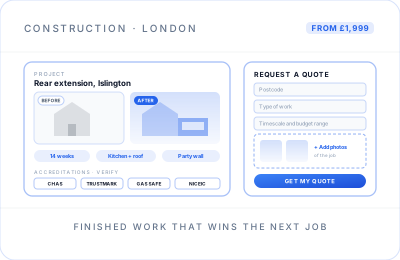
Each project with location, brief, before and after photos, duration and services used, so buyers see work like theirs.
Accreditations, Verified
CHAS, Constructionline, SafeContractor, TrustMark, Gas Safe or NICEIC shown with links to your listings, not just logos.
Tender-Ready Information
A company page and document library with insurance, health and safety, quality and environmental policies for procurement reviewers.
Quote Forms With Photos
Postcode, job type, timescale, budget range and photo upload, so you can qualify and price before driving across London.
Service Area Pages, Done Properly
Pages only for the areas you really cover, each with local projects and reviews rather than the same text with a new borough name.
Google Reviews & Profile
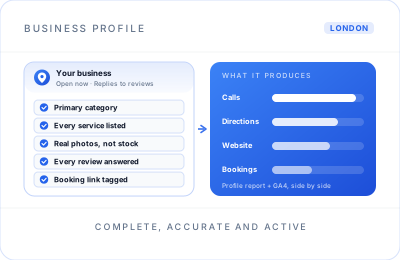
Your Google Business Profile set up for the trades you offer, with an easy review request link to send at the end of every job.
Domestic and Commercial Routes
Separate paths for homeowners and for commercial or public sector buyers, with different calls to action, so neither audience has to hunt for what matters to them.
Homeowners and procurement teams check different things.
Many London firms do both domestic and commercial work. This is how I plan the website for each.
| Homeowner | Contractor or procurement buyer | |
|---|---|---|
| What they look for first | Photos of similar jobs nearby | Accreditations and sector experience |
| Proof they trust | Google reviews and TrustMark or trade body membership | Case studies with client type, scale and duration |
| Documents they need | A clear written quote and terms | Insurance, health and safety, quality and environmental policies |
| How they get in touch | Quote form with photos, call or WhatsApp | Named contact, direct email and phone |
| What makes them leave | No reviews, no local work, slow replies | Expired accreditations, missing policies |
You run sites. I do the writing.
Content is where construction websites usually stall. This is how I get it out of a busy firm without eating your evenings.
Project Shortlist
I pick the projects that best show the work you want more of, not just the most recent ones.
Photo Brief
A one-page guide to shooting before, during and after photos on a phone, so future jobs are captured properly.
Short Project Calls
A quick call about each project; I turn your answers into a written case page for you to check.
Accreditation & Document Check
Current memberships, registration numbers, insurance and policies gathered and checked for expiry dates.
Area Plan
Which boroughs and towns get their own page, based on where you have real projects and want more work.
Add Projects as You Go
A simple template so your office can add each finished job, with a review request sent to the client.
What you say on the website has to stand up.
Accreditations, registrations and claims
Buyers and procurement teams check what your website says against scheme registers. These are the points the website is built around; check each scheme’s current rules for the detail.
- Only show what is current. Schemes such as CHAS, Constructionline, SafeContractor and TrustMark set rules on how members may use their logos. Show only memberships you currently hold, link to your listing so buyers can verify it, and remove lapsed ones promptly.
- Gas and electrical work. Businesses carrying out gas work in Great Britain must by law be on the Gas Safe Register, so gas services should show your registration number. Electricians often belong to a competent person scheme such as NICEIC for notifiable work; show it on the services it applies to.
- Claims in your marketing. The ASA’s CAP Code covers claims on your own website, so statements such as “fully insured”, “award-winning” or “London’s most trusted builder” need to be accurate and something you can support.
- Photos of clients’ homes. Get the homeowner’s permission before publishing photos of their property, and avoid showing house numbers or anything else that identifies the address.
- Domestic contracts. Homeowners who agree a contract away from your business premises, for example at their home, generally have a 14-day right to cancel under the Consumer Contracts Regulations. Your quote and terms pages should explain it.
The website is built so this information is accurate and easy to update as memberships renew. It is not legal advice: check each scheme’s current guidance and take advice on your contract terms.
A fixed price, agreed before work starts.
Builders, trades and specialist subcontractors usually fit the Starter website. Multi-division contractors and developers get a fixed written quote after a free discovery call.
Starter Website
From £1,999 One-off project fee. No cap on pages; scope confirmed in your written quote.- Custom design, mobile-first
- Project case page template
- Accreditations with verification links
- Quote form with photo upload
- Service area pages you can back up
- Local SEO setup, schema and GA4
- 30 days of support after launch
Contractor & Developer Sites
Price Quoted Fixed written quote after a free discovery call.- Everything in Starter
- Several divisions or sectors
- Tender and policy document library
- Development and plot showcase pages
- CRM integration for enquiries
- Content migration and 301 redirects
Measured enquiries, not guesswork.
I haven’t built a website for a construction firm yet, so I won’t show you one. What I have done is redesign the website for London FS, a London mortgage broker, which now runs its website, analytics, search, email marketing and CRM management, and social as one connected system, reviewed every month, with every enquiry tracked to its source. The same measurement shows which project pages and areas win you work.
Read the London FS case studyConstruction website design in London, and SEO for the areas you work in.
Construction buyers search in a very specific way. Homeowners type the job and the place: “loft conversion Islington”, “side return extension Clapham”, “roofer near me”. Commercial buyers search by capability: “commercial fit-out contractor London” or “groundworks subcontractor South East”. Good construction website design gives each of those searches a page that answers it with real projects, not a single “Services” page listing everything you have ever done.
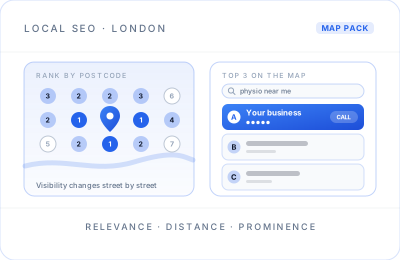
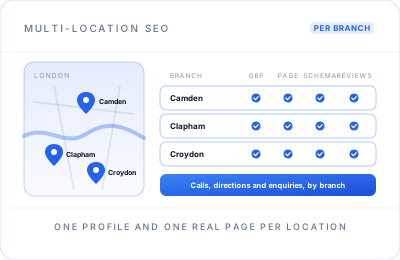
Area pages are where many builders’ sites go wrong. Dozens of near-identical pages for every borough can look like doorway pages to Google and rarely rank. Fewer, stronger pages are built for the places you genuinely work, each backed by local projects and reviews, and connected to your Google Business Profile. That is the core of local SEO in London, and if you run more than one yard or office, of multi-location SEO.
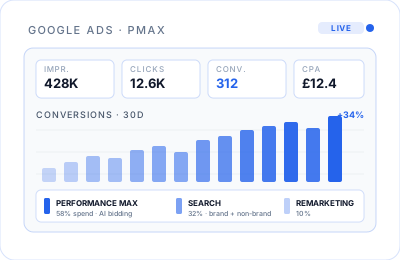
For trades that sell on urgency, such as emergency roofing or drainage, Google Ads can bring calls in the first week while organic rankings build. Every quote form, call and WhatsApp click is tracked in GA4, so you can see which pages, areas and campaigns produce real enquiries and which just produce traffic. Project pages also double as a ready answer when a homeowner or main contractor asks to see examples of similar work. If your current website is years old, a website redesign keeps whatever rankings it has while replacing the rest.
I work remotely with builders, contractors and trades across London and the South East. After launch, website maintenance keeps the site secure while you get on with the job.
Construction website questions.
Cost, accreditations, quote forms, area pages, procurement and photos.
A construction website starts from £1,999 as a one-off fee, including a custom design, project case pages, accreditation display, a quote form with photo upload, local SEO setup and GA4 tracking. Larger contractor or developer sites with several divisions or a tender document library are quoted in writing after a free discovery call.
Show every scheme you currently hold that your buyers care about, such as CHAS, Constructionline, SafeContractor, TrustMark, Gas Safe or NICEIC, and link each one to your listing so it can be verified. Remove expired memberships promptly, and follow each scheme's rules on how its logo may be used.
Yes. The quote form lets customers attach photos of the job along with their postcode, type of work, rough timescale and budget range. That helps you filter enquiries and price more accurately before a site visit. Uploads are size-limited, spam-protected and delivered securely to your inbox or CRM.
Only for areas where you genuinely work and can show real projects. Pages that simply swap the borough name into identical text can be treated by Google as doorway pages and rarely rank well. A smaller set of area pages with local project examples, reviews and photos performs better and reads better.
They look for evidence that you are safe and capable: current accreditations, insurance details, health and safety, quality and environmental policies, and case studies showing client type, scale and duration. A clear company information page and document library are built in, so pre-qualification checks take minutes rather than phone calls.
Not always. Well-lit phone photos taken at the end of a job, plus a few before and in-progress shots, work well if they are consistent. I give you a simple photo brief at the start. For flagship projects a professional photographer is worth the cost, because those images keep working for years.