A skincare store built to earn the second order.
Skincare is a considered purchase that becomes a habit. The first order depends on trust: clear ingredients, honest claims, real reviews and a checkout that does not get in the way. Every order after that depends on how easy you make it to come back. I design both journeys, on a platform your team can run day to day.
My background is enterprise ecommerce analytics: an analytics-led checkout programme across 15+ GSK consumer health brand sites, commercial intelligence for SharkNinja that included its beauty category, and digital analytics for Unilever. That is where I learned how product pages and checkouts win or lose sales.
What a skincare store needs on day one.
Shopify Store Build
A custom-designed store with collections by concern, skin type and product type, so shoppers can browse the way they think.
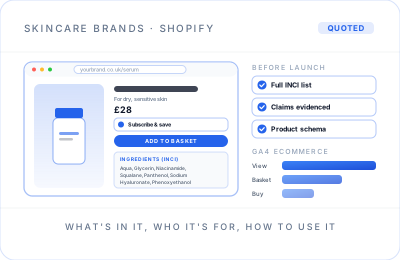
Full INCI Ingredient Lists
The complete ingredient list on every product, key actives explained in plain English, and filters such as fragrance-free or vegan.
Claims You Can Back Up
Benefit claims kept in one editable place per product, so they can be checked against your evidence and updated without a rebuild.
Subscriptions & Refills
Subscribe and save on the products people reorder, with a customer portal to skip, pause or swap without emailing you.
Reviews & Product Schema
Verified reviews with skin type and photos, marked up with product schema so price, stock and ratings can show in Google.
Ecommerce Tracking
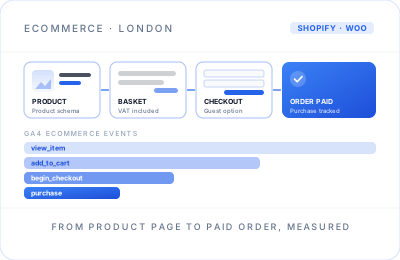
GA4 ecommerce events from product view to purchase, plus subscription sign-ups, so you can see exactly where buyers drop out.
Routines & Bundles
Shop-the-routine bundles and “pairs well with” suggestions based on real routine steps, which raise basket value without pushy pop-ups.
Six questions every product page has to answer.
In skincare, the product page does the work a counter assistant would do in store. This is the order I design it in, top to bottom.
What Is It?
Name, size, price, a one-line benefit and the add to basket button, visible on a phone without scrolling.
Is It For Me?
Skin types and concerns it suits, and just as usefully, who should choose a different product in your range.
What Is In It?
Key actives with their role in plain English, then the full INCI list exactly as it appears on the pack.
How Do I Use It?
Where it sits in a routine, how much to use, patch test advice and what to pair it with.
Does It Work For People Like Me?
Reviews filterable by skin type and concern, with customer photos, rather than a wall of five-star quotes.
What If It Doesn’t Suit Me?
Delivery times, returns policy and the subscription option, stated plainly next to the buy button.
What the website has to reflect before you sell a single jar.
Selling cosmetics online in the UK
A skincare website is marketing for a regulated product. These are the points I plan the build around. Check the current GOV.UK and ASA guidance, and your Responsible Person’s advice, for the detail.
- Notification comes first. Under the UK cosmetics rules, a product needs a UK-based Responsible Person and must be notified on the Submit Cosmetic Product Notification (SCPN) portal before it is placed on the market in Great Britain. Northern Ireland has separate arrangements.
- Claims need evidence. Cosmetic claims must be supported by evidence, and the ASA’s CAP Code applies to claims on your own website and social channels. Wording that suggests a product treats or cures a condition, such as “cures acne” or “heals eczema”, risks being treated as a medicinal claim.
- Ingredients on the page. The ingredient list is required on the packaging. I also show the full INCI list on each product page, because shoppers with sensitivities look for it before buying.
- Returns and hygiene. Online shoppers generally have a 14-day right to cancel, with an exception for sealed goods that are unsealed after delivery and are not suitable for return for health or hygiene reasons. Your returns page should explain clearly how you apply it.
The store is built so this information is easy to show and easy to keep current. This is not legal or regulatory advice: your Responsible Person and safety assessor sign off the product and its claims.
A fixed quote for the store, a clear range for SEO.
Skincare stores start from £2,499. No two ranges are the same size or shape, so your exact figure is confirmed in writing after a free discovery call. You know the full cost before anything starts.
Skincare Store
Price Quoted Fixed written quote after a free discovery call. Usually built on Shopify.- Custom store design, mobile-first
- Product pages with full INCI lists
- Collections by concern and skin type
- Subscriptions, bundles and reviews
- Product schema and Merchant Center feed
- GA4 ecommerce tracking
Skincare SEO
Typically £499–£2,499 Per month, ongoing. Depends on range size and competition.- Keyword research by concern and ingredient
- Collection and product page optimisation
- Ingredient guides and routine content
- Technical fixes and Core Web Vitals
- Monthly reporting on organic revenue
Already Have a Store?
Price Free A no-obligation SEO audit of your current store.- Indexing and duplicate content checks
- Product schema and rich result review
- Collection page opportunities
- Tracking gaps in your GA4 setup
Shopify subscription fees, paid apps, domain and payment processing are paid directly by you to those providers. See ecommerce website design for how store projects are scoped.
Checkout and category insight from global consumer brands.
At GSK Consumer Healthcare, an analytics-led programme across 15+ brand sites mapped basket abandonment above 70%; guest checkout and a mobile-first checkout rebuild delivered a 20% conversion lift. At SharkNinja, beauty was one of three categories where I analysed pricing and promotional impact across the UK, Germany and France.
Read the GSK checkout case studySkincare website design in London, then SEO that finds buyers.
Skincare website design has to do two jobs at once. It has to sell, with a checkout that works as well on a phone as on a laptop, and it has to explain, because skincare shoppers read before they buy. They want to know what is in a product, whether it suits their skin, and what people with the same concern thought of it. A Shopify store built around those questions tends to convert better than one built around beautiful photography alone.
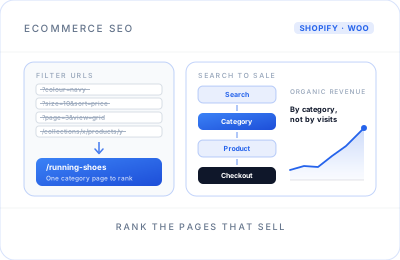
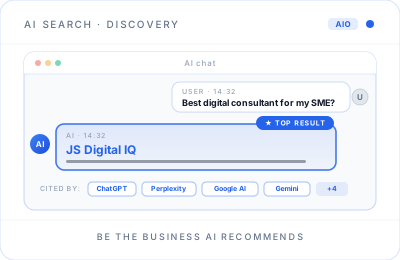
Search follows the same pattern. People look for products by concern (“serum for dull skin”), by skin type (“moisturiser for oily skin”) and by ingredient (“niacinamide serum UK”). I plan collection pages, product copy and ingredient guides around those searches, then add product schema so price, stock and review ratings can appear in Google. Supplier descriptions that already sit on dozens of other sites get rewritten, because duplicated text rarely ranks. That groundwork carries straight into ecommerce SEO and AI search optimisation, as more shoppers ask ChatGPT or Google’s AI Overviews which product to try.
Measurement is where my background helps most. Every store gets GA4 ecommerce tracking covering product views, add to basket, checkout steps and purchases, plus subscription sign-ups, so you can see where buyers drop out instead of guessing. If you are moving from WooCommerce, Wix or an older Shopify theme, a website redesign maps old URLs to new ones so rankings and reviews carry across. Once the store is live, email marketing and CRM replenishment reminders and Google Ads Shopping campaigns can run on the same product data.
I work remotely with skincare and beauty brands across London and the rest of the UK. You deal with me directly, from the discovery call to the handover.
Skincare store questions.
Cost, platform, ingredients, claims, subscriptions and SEO.
Skincare stores start from £2,499. Because product count, subscriptions, bundles and integrations vary so much between brands, the final figure comes as a fixed written quote after a free discovery call, covering design, the Shopify build, SEO setup and ecommerce tracking, so you know the full cost before any work starts.
For most skincare brands Shopify is the practical choice: a reliable checkout, mature subscription and review apps, and stock management your team can run without a developer. WooCommerce can suit brands that already run WordPress or need more content flexibility. I recommend a platform after the discovery call, based on your range, team and plans.
Yes, I recommend it. The ingredient list has to be on your packaging, and showing the full INCI list on every product page as well helps shoppers who check for allergens or specific actives before buying. It also helps search engines understand each product and cuts down the pre-sale questions your team has to answer.
Be careful. Cosmetic claims must be backed by evidence, and wording that suggests a product treats or cures a condition, such as cures acne, risks being treated as a medicinal claim. Product pages are built so claims are easy to review and change, but your safety assessor and current ASA guidance should decide the final wording.
Yes. Subscribe and save works well for cleansers, serums and moisturisers that customers reorder every month or two. I set up a subscription app on Shopify, make the option clear on product pages, and track subscription sign-ups separately in GA4, so you can see how much recurring revenue the website is really generating.
I start with how shoppers actually search: by concern, by skin type and by ingredient. That shapes collection pages, product copy and ingredient guides, supported by product schema so price, stock and reviews can show in Google. Ongoing ecommerce SEO is typically £499 to £2,499 a month, depending on range size and competition.