One website, many audiences at once.
A school website is visited by prospective parents comparing options, current parents looking for this week’s letter, job applicants, governors and inspectors. A tutor or training provider’s site has learners, parents and employers all wanting to book. The design job is making sure each of them finds their answer in a couple of clicks.
Sites are built on platforms your office team can run. I test accessibility properly rather than ticking a plugin box, and track the actions that matter: open day sign-ups, prospectus requests, course bookings and enquiries. You get a site that is easier to run and easy to measure.
Different settings, different priorities.
Schools
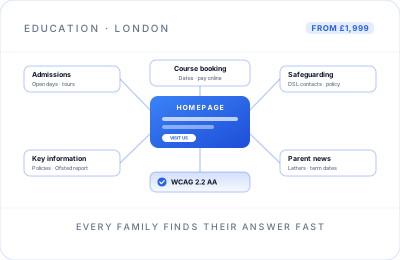
Admissions, required information, safeguarding and parent communications, organised so nothing is buried.
Nurseries
Room pages, fees and funded hours, a daily routine, visit booking and your latest Ofsted report within easy reach.
Tutors
Subject and level pages, tutor profiles with DBS status, results parents can trust and simple lesson booking.
Training Providers
Course pages with dates, outcomes and prices, online booking and payment, and group enquiries from employers.
What an education website has to do well.
Admissions & Open Days
Key dates, how to apply, open day and tour booking, and prospectus requests, all tracked as conversions.
Required Information, Organised
A clear key information section so policies, reports and statements are easy for parents and inspectors to find.
Accessibility Built In
Built and tested to WCAG 2.2 AA with keyboard and screen reader checks, plus an accessibility statement.
Safeguarding, One Click Away
DSL names, photos and contact details, the child protection policy and how to raise a concern, linked from every page.
Parent Communications
Term dates, letters home, news and a calendar parents can subscribe to, so the office answers fewer repeat questions.
Courses, Booking & Payments
For tutors and training providers: course pages with course schema, online booking, card payments and automatic reminders.
Easy for Office Staff to Run
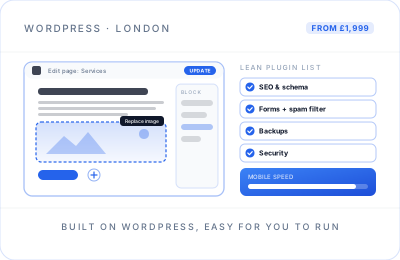
WordPress with simple editing roles, so the right people can publish news, letters and policies without breaking the design, and a recorded walkthrough at handover.
Guidance your website needs to make room for.
Statutory information, accessibility and safeguarding
Schools in England work to published government guidance on what goes online. These are the points I plan the structure around. The guidance is updated regularly, so always check the current version for your type of setting.
- Statutory school information. The Department for Education publishes guidance on what maintained schools must publish online. It includes items such as contact details, admission arrangements, curriculum information, the behaviour policy, the complaints procedure, the SEN information report and pupil premium information. Academies and free schools have separate DfE guidance and should also check their funding agreement.
- Ofsted reports. The list for maintained schools includes a copy of, or a link to, the most recent Ofsted report. Nurseries and other registered providers often link to theirs too, because parents look for it.
- Accessibility. The Public Sector Bodies Accessibility Regulations 2018 apply to public sector websites, including those of maintained schools. Schools and nurseries are partially exempt, with the requirements focused on content needed for essential administrative tasks, such as online forms. The whole site is built to WCAG 2.2 AA with a published accessibility statement, which is good practice even where it is not strictly required.
- Safeguarding. Keeping children safe in education (KCSIE) expects schools to make their child protection policy publicly available, for example on the website. Most schools also name their designated safeguarding lead (DSL) and explain how to raise a concern.
- Selling courses online. Tutors and training providers taking bookings online need clear booking terms, including how cancellation rights work, and privacy information written for parents where learners are under 18.
The site is built so every item has a clear, permanent home and staff can update it easily. It is not legal advice: check the current DfE, KCSIE and GOV.UK accessibility guidance for your setting.
A fixed price that fits a school budget.
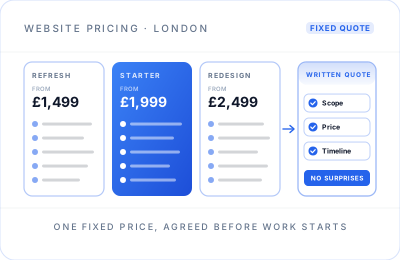
A single school, nursery or tutoring business usually fits the Starter website. Trusts and course platforms get a fixed written quote after a free discovery call.
Starter Website
From £1,999 One-off project fee. No cap on pages; scope confirmed in your written quote.- Custom design, mobile-first
- Admissions, open days or course pages
- Key information and safeguarding sections
- WCAG 2.2 AA testing and accessibility statement
- News, letters and term dates
- On-page SEO, schema and GA4
- 30 days of support after launch
Trusts & Course Platforms
Price Quoted Fixed written quote after a free discovery call.- Everything in Starter
- Trust site with individual school sections
- Course booking with card payments
- Learner or member-only areas
- Large content migration and redirects
- Email marketing and CRM integration
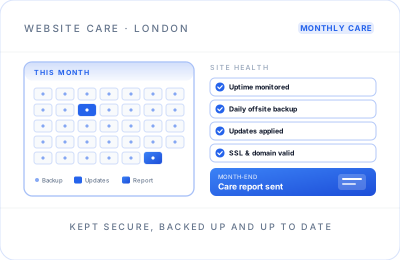
Not included in the project fee: domain, hosting and ongoing updates. Schools that would rather not manage security and plugin updates can add a website maintenance plan.
Careful migrations and a London redesign that delivers.
Moving an old school website means years of letters, policies and news. At River Island I led an analytics migration across nine international domains plus iOS and Android apps, with reporting continuity intact; the same inventory-and-check discipline goes into moving your content. London FS shows the build side: a London mortgage broker whose redesigned site now anchors four work streams run as one connected system, reviewed every month.
Read the River Island case studyEducation website design in London, and SEO that fills open days and courses.
For a state school, the website is mostly about information and trust: parents choosing between three local primaries read the admissions page, the Ofsted report and the headteacher’s welcome, then book a tour. For independent schools, nurseries and tutors, it is also a competitive sales channel. Good school website design serves both jobs: a calm, well-organised structure for existing families, and a clear route from search to open day for new ones.
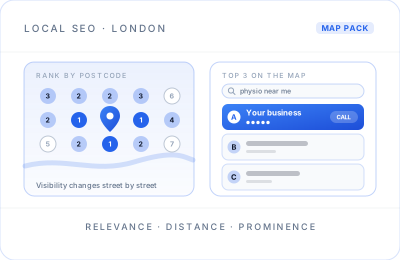
Parents search locally: “nursery near me”, “primary schools in Lewisham”, “GCSE maths tutor Ealing”. That makes local SEO and a well-kept Google Business Profile the starting point for most settings. For nurseries in particular, reviews and photos on the profile carry real weight, because many parents shortlist straight from the map. Training providers compete on course names instead, such as “first aid at work course London”, so each course gets its own page with dates, price, outcomes and course schema, rather than one long list. Where courses are time-sensitive, Google Ads can fill places while organic SEO builds.
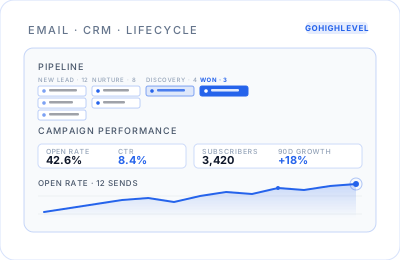
Measurement matters here too. Open day bookings, prospectus downloads, enquiry forms and course purchases are tracked in GA4, with cookie consent handled properly, so governors and owners can see what the website contributes each term. Enquiries can flow into email marketing and CRM follow-ups, so a parent who downloads a prospectus in October still hears from you before the application deadline.
I work remotely with schools, nurseries, tutors and training providers across London and the UK. If you are replacing an older site, I plan the move page by page so nothing families rely on goes missing.
Education website questions.
Cost, required information, accessibility, safeguarding, bookings and updates.
School, nursery and tutor websites start from £1,999 as a one-off fee, covering a custom design, admissions or course pages, a clear home for required information, accessibility testing, SEO setup and GA4 tracking. Multi-school trust sites, course booking with payments or large content migrations are quoted separately after a free discovery call.
Maintained schools in England must publish certain information online, set out in DfE guidance, including admission arrangements, the latest Ofsted report, curriculum, behaviour policy, complaints procedure and SEN information. Academies follow separate DfE guidance and their funding agreement. Check the current guidance; I structure the site so every required item has an obvious home.
Public sector websites, including those of maintained schools, come under the Public Sector Bodies Accessibility Regulations, although schools and nurseries are partially exempt except for content needed for essential administrative tasks, such as forms. Every education site is built to WCAG 2.2 AA with an accessibility statement anyway, because families with disabilities rely on it.
Most schools publish their child protection policy, the names and contact details of the designated safeguarding lead and deputies, and clear steps for raising a concern, including out of hours. KCSIE expects the child protection policy to be publicly available. I make the safeguarding page easy to reach from every page of the site.
Yes. Course and lesson pages are built with dates, prices, places left and a booking flow that takes card payment, using a booking tool that suits your size. Confirmation emails, reminders and cancellations are automated, and every booking is tracked in GA4, so you can see which courses sell and which need attention.
Yes. The site is built on WordPress with simple editing roles, so office staff can post news, upload letters, update term dates and replace policies without touching the design. At handover you get a recorded walkthrough, and I can provide ongoing maintenance if you would rather not manage updates and security yourselves.