Won Or Lost In The Local Search Results, Not The Homepage.
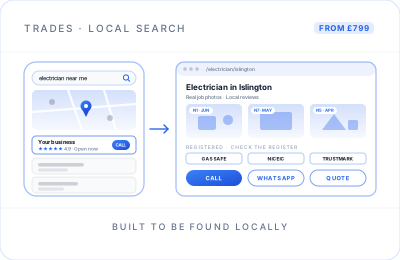
Someone with a leaking pipe or a roof that needs fixing searches on their phone, looks at the first few results and the Google Maps pack, checks a couple of reviews, and calls. There usually isn't time or appetite for a long comparison. That means the website's real job starts before someone even lands on it: showing up for “electrician near me” or “roofer in [town]” in the first place, then giving them enough to trust a call in the few seconds they'll spend deciding.
Sites for trades are designed and delivered around that reality: a Google Business Profile that's actually optimised, a page for each service and each area covered, real job photos, and a fast way to get in touch, whether that's a call, a WhatsApp message or a short quote form.
Built For Local Trades.
Google Business Profile Set Up And Optimised
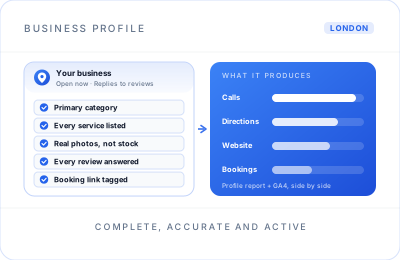
Categories, service areas, photos and opening hours completed properly, since this is usually where a local search decision actually happens, often before someone reaches the website at all.
A Page Per Service And Per Area
Separate pages for each trade or service offered, and each town or postcode area covered, rather than one generic “services” page trying to rank for everything at once.
Registration And Accreditation Shown
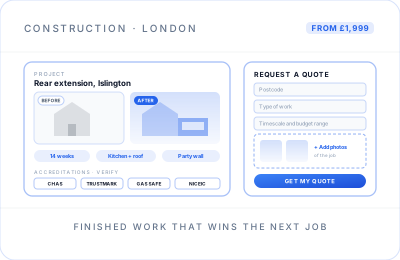
Gas Safe, NICEIC, NAPIT, TrustMark or Federation of Master Builders membership (whichever genuinely applies) displayed and linked to the relevant public register, so a claim can be checked rather than taken on trust.
Real Job Photos, Not Stock Images
Photos of actual completed jobs, ideally dated and tied to the area they were done in, since generic stock photography of tools and vans does nothing to build local trust.
Review Generation Built In
A simple, repeatable way to ask satisfied customers for a review straight after a job, since reviews are one of the strongest local ranking and trust signals available to a small trade business.
Clear Call-Out And Pricing Information
A stated call-out fee or starting price where one can honestly be given, so the phone rings from people who already have a reasonable idea of cost.
A Fast, Mobile-First Enquiry Path
Click-to-call, WhatsApp and a short quote form all easy to reach with a thumb, since most of this traffic is on a phone and in a hurry.
From A Local Search To A Booked Job.
Search locally
“[Trade] near me” or “[trade] in [town]”, usually on a phone, usually with intent to book soon rather than browse.
Check credentials and reviews
A quick glance at accreditation, real job photos and recent reviews before deciding who's worth a call.
Get a quote
A call, a WhatsApp message or a short form, ideally answered fast, since a slow reply loses the job to whoever answers first.
Book, and get reviewed afterwards
The job gets done, and a simple follow-up asks for a review while the good experience is still fresh.
What The Site Avoids, And What It Says Instead.
Examples of the patterns worth avoiding on a trades site, and what tends to work better in this sector.
| What to avoid | What to say instead |
|---|---|
| "Cheapest in [town]" with no figures behind it | A stated call-out fee or starting price, with the honest caveat that a full quote depends on the job |
| Claiming a qualification with no way to check it | The actual registration number shown and linked to the relevant public register (Gas Safe, NICEIC, and so on) |
| Generic stock photos of tools, vans or model homes | Real photos of completed jobs, ideally dated and tied to the area they were done in |
| Vague "no job too big or small" | A specific list of services actually offered, so both customers and search engines can match the site to what they need |
What The Website Plans Around
- Gas Safe registration. Anyone carrying out gas work legally must be on the Gas Safe Register; where this applies, the registration number is shown and linked so it can be checked rather than just claimed.
- Electrical competent person schemes. NICEIC, NAPIT and the ECA are the main schemes electricians use to demonstrate competence and to self-certify notifiable work under Building Regulations. Membership is displayed where it genuinely applies, not implied where it doesn't.
- TrustMark. The government-endorsed scheme for tradespeople, increasingly a requirement for certain grant-funded work such as retrofit and boiler upgrade schemes. Shown where the business holds it, since it's a checkable, government-backed signal rather than a self-awarded badge.
- Consumer Rights Act 2015. Services have to be carried out with reasonable care and skill, and any information given about the trader or the service that a customer relies on when deciding to book becomes part of the contract, which is one more reason pricing and scope claims on the site need to be accurate rather than aspirational.
- Pricing and superlative claims. Under the CAP Code, claims like “cheapest” or “best” need to be capable of being substantiated. Where a specific claim can't be evidenced, the site states something narrower and true instead.
These are short summaries the site is planned around, not the full rules, and this is not legal or regulatory advice. Accreditation schemes and their requirements vary by trade, so confirm which registrations genuinely apply to your business and keep registration numbers current before they go live.
Trades Website Pricing.
Local SEO in this sector is a mix of what the website itself is built to do, and what needs doing on an ongoing basis afterwards (reviews, citations, fresh content). The build is priced as a one-off; ongoing local SEO work is better suited to a separate, optional monthly arrangement, agreed once the site is live.
Local Visibility Starter
From £799- A mobile-first site built around your core service and area, however many pages that takes, fully delivered: custom design, built and launched, yours outright.
- Google Business Profile set up and optimised, including categories, service area and photos.
- A fast enquiry path (call, WhatsApp, short quote form).
- A simple review-request flow set up so you can ask for reviews straight after a job.
- Basic GA4 tracking, so you can see where enquiries are actually coming from.
- 30 days of support after launch.
Full Local Presence
From £1,499- Everything in Local Visibility Starter, built out to a page per service and per town you cover, however many that is.
- Local business schema markup, photo galleries of completed jobs, and call tracking alongside GA4, so you can see which pages and areas actually generate calls.
Multi-Trade / Multi-Branch
- A page per trade and per area
- Consistent accreditation display across all of them
- Consolidated reporting
- 1Discovery callFree, 30 minutes
- 2Written scopeWhat's in and out
- 3Fixed priceAgreed before work starts
I haven't built a website for a local trades business before, and I won't claim otherwise. What I bring is adjacent and real: the same local-SEO and Google Business Profile discipline I apply across every sector on this site, and hands-on GA4 and Google Tag Manager implementation experience across brands including Costa Coffee and River Island. For a trades business the fundamentals are the same as anywhere else, being genuinely findable locally, loading fast on a phone, and making it effortless to get in touch, just applied to a faster, more local decision than a considered healthcare or financial purchase.
See my experienceLocal SEO For Trades
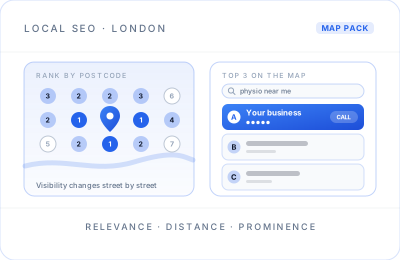
For this sector, local SEO usually matters more than the website's own design. A complete, well-categorised Google Business Profile, consistent name, address and phone details wherever the business is listed, and a steady flow of genuine reviews tend to move the needle on getting into the local map pack far more than any amount of homepage polish.
A page per service and per town, written specifically rather than generically, gives both search engines and AI tools something concrete to match a local search against, whether that search happens on Google or increasingly through an AI assistant being asked to “find a plumber near me who can come today”.
Because most enquiries in this sector come by phone or message rather than a web form, call tracking alongside GA4 is worth setting up from day one, so it's possible to see which pages and areas are actually generating paying work, not just traffic.
Trades website questions.
A Local Visibility Starter site costs from £799, fully delivered: a mobile-first site built around your core service and area, however many pages that takes, with Google Business Profile set up and optimised, a review-request flow and basic GA4 tracking. A Full Local Presence build, covering every service and every area you work in, starts from £1,499. Multi-trade or multi-branch businesses get a fixed written quote after a free discovery call.
For the areas that generate real work, yes. A single generic “we cover the whole county” page rarely ranks well for a specific local search; a page written for each area you genuinely serve gives you a far better chance of showing up when someone nearby searches.
It's a major part of it. Google Business Profile optimisation, consistent business details across the web and genuine reviews all feed into whether a business appears in the local map pack, which is where a large share of trades searches get decided.
It does, and it's worth planning for rather than ignoring. Each trade you want to be found for generally needs its own page, since search engines and AI tools tend to match a specific search to a specific, clearly written page rather than one page trying to cover everything.
The website build is a one-off. Ongoing local SEO, review generation, citations and fresh content, tends to work better as a separate, optional monthly arrangement agreed once the site is live, since that work is continuous rather than a single project.
The site includes a simple, repeatable way to ask for a review right after a job, since that's the point a happy customer is most likely to leave one. Building the habit of asking every time is the biggest single lever most trades businesses have for this.