Private healthcare website design for clinics and consultants.
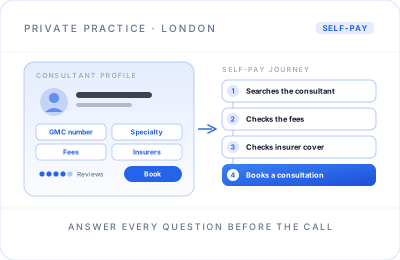
A self-pay patient is spending their own money, or their insurer's, and they research accordingly. They look up the consultant by name, compare two or three clinics, check the price, check their policy, and read what other patients say. Many of them do all of this before your practice team ever hears from them.
Private clinic websites are built around that decision: consultant pages that stand up to scrutiny, fees stated plainly, insurer information that saves a phone call, and a booking route for patients who are ready now. Then I measure which consultants, procedures and channels actually bring in self-pay enquiries.
The pages a self-pay patient goes looking for.
Consultant Profiles
GMC number linked to the public register, specialties and interests, hospitals where they practise, insurers recognised and a booking button for that consultant.
Fee & Package Pages
Consultation and procedure prices with what is and isn't included, laid out so they are easy to keep consistent with the fee information your consultants publish.
Insurer Information
Which insurers recognise each consultant or service, and what an insured patient needs before booking, such as a GP referral or pre-authorisation code.
Independent Reviews
Review feeds from platforms such as Doctify or Top Doctors, plus Google reviews, shown as published on consultant and treatment pages.
Procedure Pages
Who a procedure suits, what happens on the day, recovery, risks, cost and the consultants who perform it, all on one page.
Book the Way Patients Choose
By specialty, by named consultant or by earliest appointment, with a callback request for patients who want to talk it through first.
Enquiries Tracked by Consultant and Specialty
GA4 and your CRM show which consultants, procedures and marketing channels produce self-pay enquiries, so budget follows what books rather than what gets clicks. Nothing a patient types about their health is sent to analytics.
A generic clinic template versus a private practice build.
Most off-the-shelf clinic themes are designed around a services list and a contact form. Private patients need more than that before they commit.
| What the patient needs | Generic template | Built for private patients |
|---|---|---|
| Consultant pages with GMC number and register link | ||
| Consultation and procedure fees stated clearly | ||
| Insurers recognised, per consultant | ||
| Book by consultant or earliest appointment | ||
| Independent reviews shown in full | ||
| Enquiries tracked by consultant and specialty |
Private healthcare points the website is built around
Short summaries to plan the website around, not the full rules. Check the current guidance from PHIN, the GMC, CQC and the CMA for what applies to your practice.
- Fee transparency. Under the CMA's Private Healthcare Market Investigation Order 2014, consultants who treat private patients are required to provide fee information to the Private Healthcare Information Network (PHIN), and patients should be given fee information before consultations and treatment. Fee pages are built to be easy to keep consistent with what is published on PHIN.
- Doctor profiles. GMC guidance expects information doctors publish about their services to be factual and verifiable. Showing each doctor's GMC number, linked to the public register, lets patients check it, and titles such as "specialist" or "consultant" should only be used where accurate.
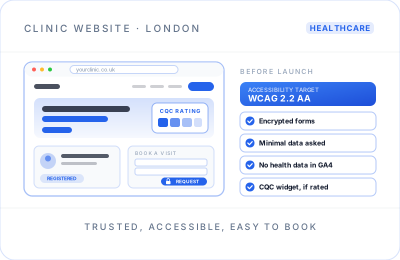
- CQC. Many private clinics carrying out regulated activities must be registered with CQC, and a registered provider that has been rated must display its rating on its website. I add CQC's official widget where it applies.
- Reviews. UK consumer law, strengthened by the Digital Markets, Competition and Consumers Act 2024, bans fake reviews and presenting reviews in a misleading way, so review feeds are shown as published rather than cherry-picked.
- Claims. Phrases such as "London's leading" or "best outcomes" are marketing claims under the CAP Code, which the ASA enforces on your own website too, and need evidence to back them up.
The website is built to support these requirements and I flag anything that looks risky, but this is not legal or regulatory advice. Your medical director or compliance adviser should approve the final content.
Three search patterns worth building for.
Consultant Name Searches
Referred patients often search the consultant's name. A thorough profile on your own site gives you the best chance of appearing alongside directory and hospital listings, and keeps the booking with you.
Procedure and Price Searches
"Private MRI scan London cost" or "private knee replacement price". Pages that state prices and what they include answer the question searchers are actually asking.
The Harley Street Effect
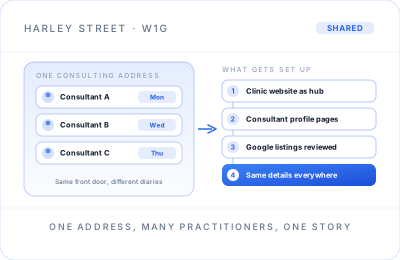
Searches around Harley Street and the W1 medical district are some of the most contested clinic searches in the UK. Focused specialty pages, a complete Business Profile and honest reviews beat a bigger homepage. Practising on Harley Street itself? See Harley Street clinic websites.
Practise what you preach: a clear price.
A single clinic or consultant practice usually fits the Starter website. Larger groups get a fixed written quote after a free discovery call.
Starter Private Clinic Website
From £1,999 One-off project fee. No cap on pages; scope confirmed in your written quote.- Custom design, not a clinic template
- Consultant, procedure and fee pages
- Insurer information and review feeds
- Booking link or enquiry and callback forms
- On-page SEO and schema for practitioners
- GA4 enquiry tracking by specialty
- 30 days of support after launch
Groups & Multi-Consultant
Price Quoted Fixed quote after a discovery call. For larger practices and groups.- Everything in Starter
- Profiles for many consultants
- Several sites or hospital locations
- Booking, CRM or practice-system integration
- Content migration and 301 redirects
- Reporting by consultant and channel
High-value, carefully compared decisions.
London FS, a London mortgage broker, now runs its website, analytics, search, email marketing and CRM management, and social as one connected system, reviewed every month: website redesign, GA4, SEO, email marketing and CRM delivered as one programme. It is a different sector with the same shape of problem: a regulated, high-value decision where people compare carefully and trust decides who they call. Earlier, at GSK Consumer Healthcare, an analytics-led checkout programme across 15+ brand sites delivered a 20% conversion lift.
Read the London FS case studyA private clinic website that earns its keep.
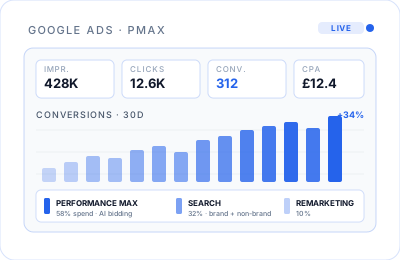
In private healthcare, one new patient can be worth a lot to a practice, which is why the cost of a click on Google Ads for private treatment can be high. That makes the website the most important piece of the marketing: if a paid visitor lands on a vague page with no fees and no consultant details, the money is gone. I design each consultant, procedure and fee page to answer the patient's next question before they have to ask it, so more of the traffic you already get turns into consultations.
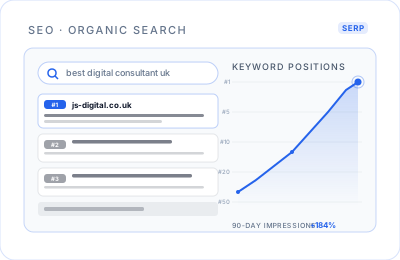
Search is where most self-pay journeys begin. The site launches with clean structure, practitioner and clinic schema, and pages mapped to the terms patients use, which gives ongoing SEO something solid to build on. Clear, factual pages with named, registered authors are also what AI assistants quote when a patient asks which clinic to see, so I plan content with AI search optimisation in mind. If you do run paid campaigns, Google Ads landing pages can be built on the same templates.
Private patients rarely book on the first visit. Follow-up matters, so enquiry forms can feed your CRM, with automated, sensible reminders sent through email marketing, and GA4 shows which consultants and channels produce booked consultations rather than just form fills. It also shows where patients drop out, for example on a fee page or at the booking step, so you know which page to improve first.
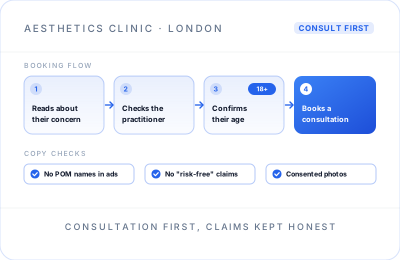
For NHS-facing services, therapists and community clinics, see healthcare website design; for injectables and skin clinics, see aesthetics clinic websites. I work remotely with practices across London.
Private clinic website questions.
Cost, fees, consultant pages, insurers, reviews and competing in W1.
A private clinic Starter website costs from £1,999, including a custom design, consultant and treatment pages, SEO setup and GA4 tracking, with the scope confirmed in your written quote and no cap on pages. Clinics with many consultants, several sites or booking and CRM integrations get a fixed written quote after a free discovery call.
In most cases, yes. Self-pay patients expect to see consultation and procedure prices before they enquire, and consultants are already required to provide fee information to PHIN under the CMA's Private Healthcare Market Investigation Order. Clear fees on your own site, consistent with PHIN, build trust and filter out poorly matched enquiries.
A good profile shows the consultant's photo, GMC number with a link to the register, specialties and special interests, qualifications, the hospitals and clinics where they practise, insurers that recognise them, fees or a link to them, reviews and a booking button. Patients often search a consultant's name, so this page matters.
By being more specific rather than bigger. Build a page for each specialty, procedure and consultant, make each one genuinely useful, keep your Google Business Profile complete and collect honest reviews. Large clinics often rank on brand strength; focused pages that answer a patient's exact question can compete for the searches that matter to you.
Yes. I add an insurer section to each consultant and service page, listing the insurers that recognise them and explaining what a patient needs before booking, such as a GP referral or a pre-authorisation code. Keeping this accurate reduces admin calls and helps insured patients book with confidence rather than ringing round.
Yes, where the platform offers a widget or feed, and I can add your Google reviews too. Reviews are shown as the platform publishes them, not hand-picked, because UK consumer law bans fake reviews and presenting reviews in a misleading way. Independent reviews on consultant pages are one of the strongest trust signals a patient sees.