Aesthetics clinic website design that earns trust first.
Aesthetics patients are cautious, and they have reason to be. Before booking they look for a qualified practitioner, a clean clinic, honest results and reviews they can believe. At the same time, the rules on how some treatments can be promoted are stricter than many clinic owners realise, and plenty of off-the-shelf clinic sites break them on the homepage.
I design aesthetics websites around the patient's concern and the consultation, not around product names and discounts. That approach fits the advertising rules, attracts better-informed patients, and gives search engines and AI tools clear, trustworthy pages to show.
A website that supports compliance instead of testing it.
Concern-Led Pages
Pages for the concerns patients search for, such as lines and wrinkles, volume loss, pigmentation or acne scarring, each leading to a consultation.
Consultation-First Booking
Patients book a consultation with a qualified practitioner, with a short pre-consultation form and a clear explanation of what happens next.
Practitioner Credentials
Each practitioner's profession and registration, linked to the register, plus memberships of registers such as the JCCP or Save Face where they hold them.
Age Confirmation
An age confirmation step in booking for treatments that cannot legally be given to under-18s in England, with a note that ID will be checked.
Results With Consent
Real, unfiltered before-and-after photos, used with written patient consent and captioned with what was done and over what period.
Risks & Aftercare
Honest information on side effects, downtime and aftercare. It builds trust, and it fits the rules on responsible claims.
Found Without Paid Ads for Prescription Treatments
Prescription-only medicines cannot be advertised to the public, so organic search, your Google Business Profile and AI answers do more of the work. Every concern page is structured to be found, understood and quoted.
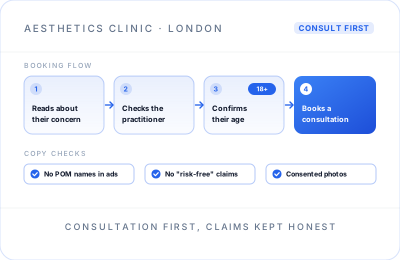
From concern to consultation in four steps.
Understand the Concern
What causes it, the kinds of approach a practitioner may discuss, realistic expectations and what a consultation covers.
Meet the Practitioner
Profession, registration, training and genuine reviews, all one tap from every concern page.
Request a Consultation
Age confirmation, a few essential questions and a secure form or booking slot. No more personal detail than you need.
Plan Together
Treatment options, risks and costs are discussed in person with the practitioner, where they belong.
What the site avoids, and what it says instead.
Examples of the patterns I plan copy around. Your prescriber or compliance adviser has the final say on wording.
| Promotional wording to avoid | What the site says instead |
|---|---|
| "Botox from £X" or "20% off Botox" on the homepage, social posts or ads | Book a consultation for lines and wrinkles |
| "Anti-wrinkle injections" as a headline or offer | Concern pages for frown lines, forehead lines and crow's feet |
| "Risk-free", "painless" or "guaranteed results" | What to expect, possible side effects and aftercare |
| "Look ten years younger" | Realistic outcomes, shown with consented, unfiltered patient photos |
| Countdown offers that push a quick decision | Time to think, with a consultation before any commitment |
Based on ASA and CAP guidance on prescription-only medicines and cosmetic interventions. The ASA's advice on what factual information, such as a price list, can include is detailed, so check its current guidance.
The aesthetics rules the website is built around
Summaries only. The rules in this sector are changing, so check the current ASA, CAP and government guidance before content goes live.
- Prescription-only medicines. Botox and other botulinum toxin products are prescription-only medicines. UK medicines law and the CAP Code, enforced by the ASA, do not allow prescription-only medicines to be advertised to the public, and that covers your website, social media and paid ads. The ASA has also indicated that terms such as "anti-wrinkle injections" can be read as promoting a prescription-only medicine. So promotional copy focuses on the patient's concern and the consultation, not the product.
- Under-18s. In England, the Botulinum Toxin and Cosmetic Fillers (Children) Act 2021 makes it an offence to give botulinum toxin or dermal filler for a cosmetic purpose to anyone under 18, or for a business to arrange it. CAP rules also say ads for cosmetic interventions must not be targeted at under-18s. Booking flows include an age confirmation step.
- Responsible claims. Claims need evidence, and marketing for cosmetic treatments should not trivialise the decision or play down risks, so words like "risk-free", "painless" or "guaranteed" are avoided.
- Practitioner credentials. I show each practitioner's profession and registration, and membership of voluntary registers such as the JCCP or Save Face where they hold it. The government has announced plans for a licensing scheme for non-surgical cosmetic procedures in England, so requirements may change; check its current status.
- Photos. Before-and-after images need the patient's written consent and should not be edited or filtered in a way that exaggerates results.
The website is built to support compliance: the page structure, wording patterns, age step and credential displays. I'm not a lawyer or a regulator and this is not legal advice. Your prescriber or compliance adviser should approve all treatment wording before launch.
No hidden extras, no pressure to decide.
A single clinic usually fits the Starter website. Groups, academies and online skincare shops get a fixed written quote after a free discovery call.
Starter Aesthetics Website
From £1,999 One-off project fee. No cap on pages; scope confirmed in your written quote.- Custom design, not a beauty template
- Concern, practitioner and aftercare pages
- Consultation booking with age confirmation
- Consented results gallery
- On-page SEO, schema and XML sitemap
- GA4 tracking for consultation requests
- 30 days of support after launch
Clinic Groups & Shops
Price Quoted Fixed quote after a discovery call. For larger or more complex sites.- Everything in Starter
- A page for each clinic location
- Skincare product shop
- Training academy and course booking
- Content migration and 301 redirects
- Reporting by clinic and concern
No aesthetics case study. Here's the relevant experience.
I haven't built a website for an aesthetics clinic before, and I won't claim otherwise. My health-sector background is analytics: at GSK Consumer Healthcare I owned digital insights and analytics for 15+ brand websites, including Sensodyne and Voltarol, and an analytics-led checkout programme there delivered a 20% conversion lift. I also redesigned the website for London FS, a London mortgage broker, and manage its wider digital delivery: four work streams now run as one connected system, reviewed every month.
Read the GSK case studySearch matters more when advertising is restricted.
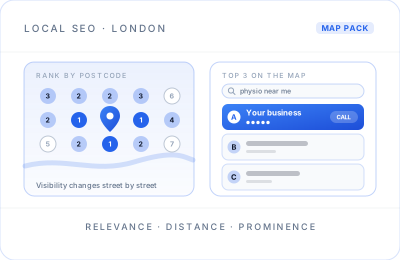
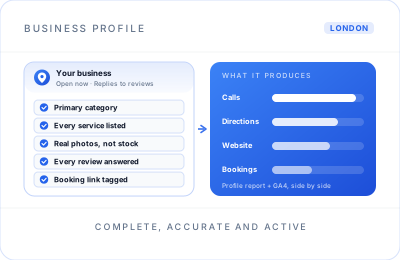
Most aesthetics clinics can't simply buy their way to the top of Google for their most popular treatments, because prescription-only medicines cannot be advertised to the public. That shifts the weight onto organic search, the map results and AI answers. The clinics that do well there tend to have a clear page for each concern patients search for, detailed practitioner profiles, a complete Google Business Profile and a steady stream of genuine reviews.
London aesthetics search is also very local. People look for help with a concern in Chelsea, Marylebone, Richmond or near their office, and they compare a handful of clinics on a phone. Location details, schema and internal links are built in so each page supports local SEO in London, and I write concern pages in plain, careful language that answers real questions. That same structure is what ChatGPT, Gemini and Google AI Overviews draw on when someone asks which clinic to trust, which is why AI search optimisation is built into the plan rather than added later.
Content should come from, or be reviewed by, your practitioners, with names, registrations and review dates shown. Search engines treat health and appearance topics carefully, and visible expertise is how a clinic earns their trust as well as the patient's. Ongoing SEO can then build on that foundation with new concern pages and guides.
If your business is a salon rather than a clinic, see beauty salon website design; for doctor-led private clinics, see private healthcare websites. I work remotely with clinics across London.
Aesthetics website questions.
Cost, prescription-only treatments, under-18s, credentials and search.
An aesthetics clinic Starter website costs from £1,999, including a custom design, concern and practitioner pages, consultation booking with an age confirmation step, SEO setup and GA4 tracking. Pages aren't capped; the scope is confirmed in your written quote. Clinic groups, training academies or sites that sell skincare online are quoted at a fixed price after a free discovery call.
Not in promotional copy. Botox and other botulinum toxins are prescription-only medicines, and UK rules enforced by the ASA do not allow them to be advertised to the public, including on your own website and social media. Pages should focus on the concern and the consultation instead. Check the ASA's current guidance on factual information such as price lists.
In England it is an offence to give botulinum toxin or dermal filler to under-18s for cosmetic purposes, or for a business to arrange it, so booking flows include an age confirmation step and your team checks ID at the appointment. CAP rules also say ads for cosmetic interventions must not be targeted at under-18s.
Because prescription-only treatments need a proper assessment before anything is decided, and patients want to meet the practitioner first. Booking a consultation rather than a named treatment keeps the website within the advertising rules, lets you assess suitability and manage expectations, and tends to bring in better-informed patients who are more likely to go ahead.
Show each practitioner's profession and professional registration, such as GMC, NMC, GDC or GPhC, with a link to the relevant register, plus relevant qualifications and membership of voluntary registers such as the JCCP or Save Face where they hold it. Clear, checkable credentials are one of the strongest reasons a cautious patient chooses one clinic over another.
Through organic and local search. Concern pages written for how patients search, such as help with frown lines in Chelsea, a complete Google Business Profile, genuine reviews and practitioner-written content all help. Because prescription-only medicines cannot be advertised to the public, clinics that invest in their website and SEO have a real advantage.