Dental website design for two kinds of patient.
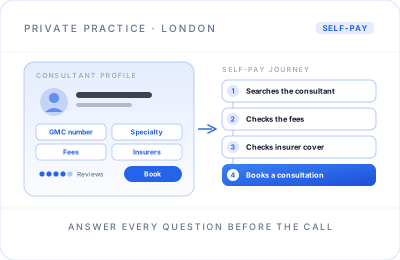
Dental patients in London arrive with one of two jobs in mind. Some need a dentist near home or work for check-ups, hygiene or a sudden toothache, and want to know if you're taking patients, whether it's NHS or private, and when they can come in. Others are researching implants, aligners or cosmetic work, comparing prices, finance and results across several practices before they commit.
A good dental website serves both without making either one dig: fast, local, practical information on the surface, and deep, honest treatment pages underneath. That is the structure I design around, with booking one tap away on every page.
Everything a practice website has to get right.
Treatment Pages
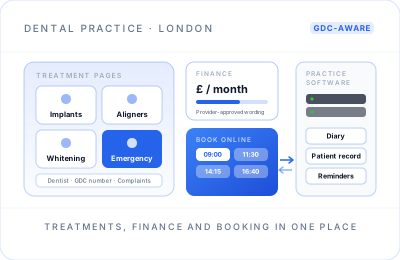
A page per treatment with who it suits, the steps, how long it takes, aftercare, prices from and the clinicians who provide it.
Finance Information
Pay-monthly and 0% finance sections, or a finance calculator where your provider supplies one, using the provider's approved wording.
Online Booking
Integrations with booking systems such as Dentally or Software of Excellence, or a booking link or request form where full integration isn't available.
Team & GDC Details
Every dentist and dental care professional with their photo, qualifications and GDC registration number, plus practice and complaints details.
Before & After Galleries
Galleries grouped by treatment, using real cases with written patient consent and captions that say what was done.
NHS & Private Availability
A clear, easy-to-update statement of whether you're taking new NHS patients, private patients or both, so reception gets fewer "are you taking patients?" calls.
Emergency Patients, One Tap Away
Someone searching for an emergency dentist is in pain and on a phone. A sticky click-to-call button, emergency hours and out-of-hours advice sit on every page, and each call is tracked as a conversion.
One page per treatment, each answering its own questions.
Patients searching for a treatment want that treatment's page, not a list of everything you do. These are the pages most practices need; your written scope confirms which ones yours gets.
GDC guidance and other rules the website is built around
Summaries to plan the site around, not the full text. Check the GDC's current guidance on ethical advertising and your finance provider's requirements before content goes live.
- Practice and dentist details. The GDC's guidance on ethical advertising sets out information a practice website is expected to include, such as each dentist's name, qualifications and GDC registration number, the practice address and contact details, how patients can complain, and the date the site was last updated.
- Titles and specialist status. The word "specialist" should only be used for dentists on one of the GDC's specialist lists, and GDC guidance says dentists who use the courtesy title "Dr" should make clear they are not a registered medical practitioner, unless they are one.
- Accurate claims. Advertising must be accurate and not misleading, under both GDC guidance and the CAP Code that the ASA applies to your own website. Claims such as "painless" or "best in London" need care or evidence.
- Finance. Promoting 0% or pay-monthly finance is usually a financial promotion under FCA rules, so use the wording and representative example your finance provider approves.
- Before-and-after photos. Use real, unretouched cases with the patient's written consent for website use, and keep the consent records.
- NHS availability. Say clearly whether you're accepting new NHS patients, and keep it up to date; an out-of-date statement frustrates patients and wastes reception time.
The website is built to support these requirements and I flag anything that looks risky, but this is not legal or regulatory advice. The practice owner or principal dentist remains responsible for the content and should approve it before launch.
A treatment plan for your website, priced up front.
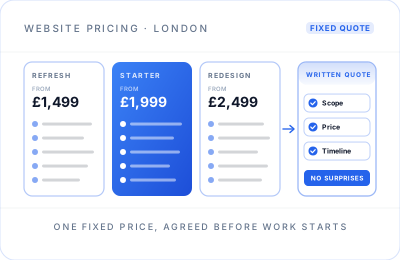
A single practice usually fits the Starter website. Dental groups and deeper software integrations get a fixed written quote after a free discovery call.
Starter Dental Website
From £1,999 One-off project fee. No cap on pages; scope confirmed in your written quote.- Custom design, not a dental template
- Treatment, team and GDC detail pages
- Booking link or request form
- Finance section with approved wording
- On-page SEO, schema and XML sitemap
- GA4 tracking for bookings and calls
- 30 days of support after launch
Dental Groups & Integrations
Price Quoted Fixed quote after a discovery call. For groups and complex setups.- Everything in Starter
- A page and profile for each practice
- Integrated online booking by appointment type
- Finance calculators from your provider
- Content migration and 301 redirects
- Reporting by practice and treatment
No dental case study yet. Here's what I have done.
I haven't built a website for a dental practice before, and I won't pretend otherwise. I did redesign the website for London FS, a London mortgage broker in a regulated sector, and now run its website, GA4, SEO, email marketing and CRM management as one connected system, reviewed every month. Careful wording, visible credentials and properly measured enquiries are exactly what a dental website needs too.
Read the London FS case studyHow a London dental practice gets found and chosen.
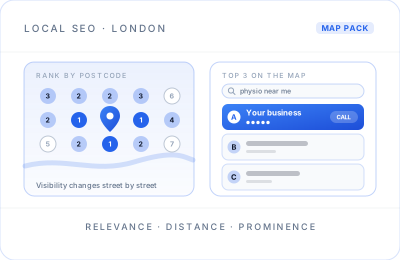
Dental search in London splits into two very different patterns. "Dentist near me", "emergency dentist Hackney" and "NHS dentist taking new patients" are local searches decided largely in the Google map results, where your Google Business Profile, your reviews and the accuracy of your details carry most of the weight. "Dental implants cost London" or "Invisalign Clapham" are research searches, where a thorough, honest treatment page on your own site is what earns the click and the enquiry.
That's why dental website design and dental SEO should be planned together. I map each treatment to its own page with its own search terms, add practice and dentist schema, and make sure every location has consistent details across the site and the web. The groundwork supports local SEO in London from launch, and gives ongoing SEO something to build on if you want to compete for high-value treatments across a wider area.
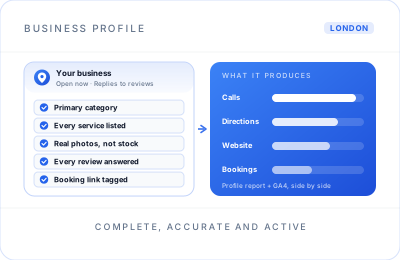
Measurement closes the loop. GA4 records online bookings, form requests and calls by treatment page, so you can see which treatments the website actually sells and which pages need work. If you advertise implants or aligners through Google Ads, that same tracking tells you what each booked consultation costs. It also shows which pages patients leave from, so improvements go where they make a difference instead of into a full redesign every few years.
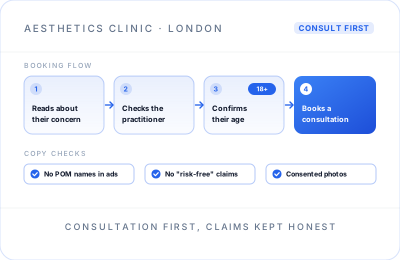
Offering facial aesthetics alongside dentistry? The rules on promoting prescription-only treatments are strict, so see aesthetics clinic website design for how I handle those pages. I work remotely with practices across London.
Dental website questions.
Cost, GDC details, booking, finance, photos and local search.
A dental Starter website costs from £1,999, including a custom design, treatment and team pages, SEO setup, GA4 tracking and a booking link or form. Pages aren't capped; the scope is confirmed in your written quote. Dental groups, multi-site practices and full practice-software integrations are quoted at a fixed price after a free discovery call.
The GDC's guidance on ethical advertising sets out information a practice website is expected to show, including each dentist's name, qualifications and GDC registration number, the practice address and contact details, how to complain, and when the site was last updated. Check the current guidance for the full list; these details are built in as standard.
Usually, yes. I connect the site to booking systems such as Dentally or Software of Excellence where they offer online booking, so patients see real availability for the right appointment type. Where a full integration is not possible, the site uses a booking link or a short request form, and every booking is tracked in GA4.
Yes, if the wording is right. Finance offers are usually financial promotions regulated by the FCA, so use the wording and representative example your finance provider approves, and check your practice has the right FCA permission or arrangement in place. Finance sections are built to be easy to update when the provider's terms change.
Yes, with care. Get the patient's written consent for website use, show real, unretouched results, and avoid implying every patient will get the same outcome. Photos of identifiable patients are personal data, so keep the consent records safely. Galleries are built by treatment, with captions that explain what was done and over what period.
Through local search first. A complete Google Business Profile, steady genuine reviews, a page for each treatment and a clear statement of whether you accept NHS patients all help. Treatment pages for implants, aligners or emergency appointments let you compete beyond the few streets around the practice, because patients will travel for the right dentist.