People choosing an immigration lawyer are looking for reasons to trust you.
Your clients are often facing a deadline, a refusal or a family separation, sometimes reading in their second or third language. They compare firms on clarity: do you handle my route, what will it cost, who will do the work, and are you properly regulated? A website that answers those questions plainly wins the consultation.
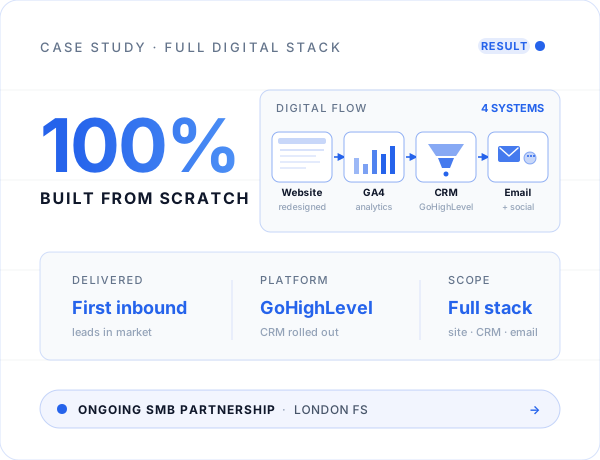
I have not built websites for law firms, and I won’t pretend otherwise. The closest work is London FS, a London mortgage broker in regulated financial services, where the website redesign and the wider digital work were shaped around the compliance limits a regulated firm has to respect.
What an immigration website has to get right.
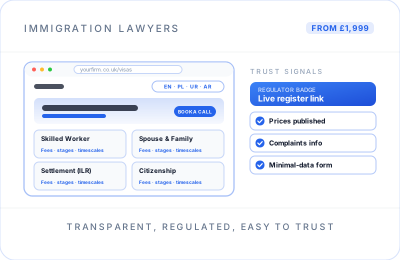
A Page for Every Visa Route
Separate, focused pages for each route you handle, so clients and Google both find the exact service they need.
Price & Service Information
Clear pricing pages showing costs, what is included, key stages and timescales, laid out so updates take minutes.
Regulatory Trust Signals
The SRA badge or IAA registration, complaints procedure and team credentials, placed where a nervous client looks for them.
Multilingual Content
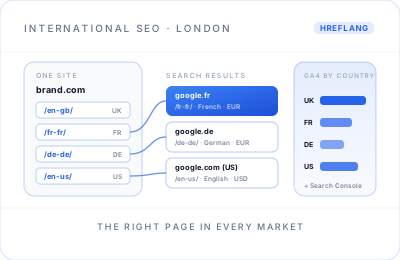
Human-translated pages in the languages your clients speak, with a clear language switcher and hreflang tags for search.
Careful Enquiry Triage
Short forms that capture route, urgency and language, and deliberately avoid collecting sensitive documents at first contact.
Consultation Booking
Book an initial consultation online, in person or by video, with optional up-front payment for fixed-fee consultations.
Content That Stays Current
Immigration rules and Home Office fees change often. Each service page shows who reviewed it and when, so out-of-date guidance never sits on your site unnoticed.
One page per route, written for the person applying.
Each route page follows the same structure: who it is for, how you help, what it costs, how long it takes and what to do next. The legal content comes from you; I shape it so it reads clearly and ranks.
Skilled Worker Visas
For individual applicants, plus a separate page for employers needing a sponsor licence, since the two audiences search differently.
Spouse & Family Visas
Partner, parent and child applications, with a plain-English outline of what evidence clients usually need to gather.
Indefinite Leave to Remain
ILR pages that link naturally from each visa route, because clients plan for settlement from the day they arrive.
British Citizenship
Naturalisation and registration pages, with the next steps after ILR set out clearly so existing clients come back to you.
Refusals & Appeals
A calm, urgent-first page with a direct phone route, because clients facing a refusal deadline will not fill in a long form.
Other Routes You Handle
Student, visitor, Global Talent or any other route you specialise in, added only if it is work you genuinely want.
Regulatory points your website has to reflect.
SRA and IAA points the website is built around
Your regulator sets the rules; the website is where many of them become visible to clients. These are the points I plan for. Check the current SRA or IAA guidance for the exact requirements that apply to your practice.
- Price and service information. The SRA Transparency Rules require regulated firms to publish price and service information for certain services, and the list includes some immigration applications and appeals, with asylum excluded. That generally means costs or a cost range, what is and isn’t included, key stages, timescales and who will do the work.
- Complaints information. The same rules require firms to publish their complaints procedure, including how and when a client can complain to the Legal Ombudsman and to the SRA.
- The SRA digital badge. SRA-regulated firms must display the SRA’s digital badge on their website. I use the official embed code, which links to your live register entry, and place it prominently in line with the SRA’s current guidance.
- Non-solicitor advisers. In the UK, immigration advice can generally only be given by people who are qualified to do so. Advisers who are not solicitors or other authorised lawyers normally need to be regulated by the Immigration Advice Authority (IAA, formerly the OISC). The website should show that registration and describe only the level of work you are authorised for.
- Sensitive personal data. Immigration enquiries can reveal details that count as special category or criminal offence data under UK GDPR. Website forms collect the minimum; documents are exchanged later through your secure systems.
The website is built so this information is easy to publish and keep current. It is not legal or regulatory advice: your compliance officer and your regulator’s current guidance decide the detail.
Transparent pricing, as you would expect.
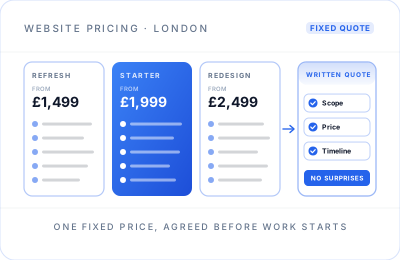
An independent practice usually fits the Starter website. Multilingual and multi-office firms get a fixed written quote after a free discovery call.
Starter Website
From £1,999 One-off project fee. No cap on pages; scope confirmed in your written quote.- Custom design, mobile-first
- Service pages for your main visa routes
- Price and service information pages
- Regulator badge and complaints page
- Minimal-data enquiry form
- On-page SEO, schema and GA4
- 30 days of support after launch
Multilingual & Larger Firms
Price Quoted Fixed written quote after a free discovery call.- Everything in Starter
- Several languages with hreflang
- Multiple offices and team profiles
- Consultation booking and payments
- CRM or case management hand-off
- Content migration and 301 redirects
A regulated London firm, now getting steady enquiries through digital.
London FS, a London mortgage broker, had a limited digital presence and no systematic way to follow up an enquiry. I delivered the website redesign, GA4, SEO, a Google Ads trial, email marketing and CRM management as one programme, within the limits a regulated financial services firm works under, with results reviewed together every month.
Read the London FS case studyImmigration solicitor website design in London, then SEO for every route.
Immigration clients rarely search for a firm by name. They search for their problem: “spouse visa solicitor London”, “ILR application help”, “sponsor licence lawyer”, or the same questions in Arabic, Polish, Urdu or Portuguese. Good immigration solicitor website design starts from that list of searches, so every route you handle has one strong page rather than a single “Services” page trying to rank for everything. Each page then links to the route a client is likely to need next, such as settlement after a Skilled Worker visa, so the relationship continues beyond one application.
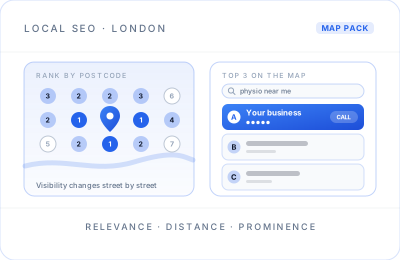
Legal advice sits in the group of topics Google treats most cautiously, because bad information can seriously harm someone. That makes trust signals part of your SEO, not just your design: named authors with their qualifications, reviewed dates, published prices and a visible regulator badge all help. For the firm itself, local SEO and a well-kept Google Business Profile capture “near me” searches around your office, while multilingual SEO with hreflang lets translated pages rank in their own language.
Clients also ask AI assistants which lawyer to use and what a visa costs. Clear, well-structured answers with FAQ schema give your pages a better chance of being cited, which is the focus of AI search optimisation. And because every enquiry is tracked by route and language in GA4, you can see which services the website is really winning, and where paid search through Google Ads might fill the gaps.
I work remotely with immigration practices across London and the UK. If your current site is outdated, a website redesign keeps the rankings you have while fixing the rest.
Immigration website questions.
Cost, price transparency, the SRA badge, IAA advisers, languages and enquiry forms.
Websites for immigration practices start from £1,999, covering a custom design, service pages for your main visa routes, price and service information pages, enquiry forms, SEO setup and GA4 tracking. Multilingual sites, several offices or booking and payment integrations are quoted separately after a free discovery call, so the full cost is fixed in advance.
SRA-regulated firms must publish price and service information for certain services, and the list includes some immigration applications and appeals, with asylum excluded. The information covers costs, what is included, key stages and timescales. Check the current SRA Transparency Rules for the exact scope; pricing pages are built to be easy to keep updated.
SRA-regulated firms must display the SRA digital badge on their website, and the SRA expects it to be prominent. I add the official embed code so it links to your live register entry, place it where visitors will notice it, and check it loads correctly on every page template before launch.
Yes. Advisers who are not solicitors or other authorised lawyers generally need to be regulated by the Immigration Advice Authority, formerly the OISC, to give immigration advice. The website should show your registration clearly and describe only the level of work you are authorised to do, and I structure service pages around that.
Often, yes. Many clients research in their first language even when they speak English well. Properly translated pages are built with a language switcher and hreflang tags, rather than an automatic translation widget. Legal content should be translated or checked by a qualified human translator, and reviewed by your team, before it goes live.
As little as possible at first: name, contact details, preferred language, the visa route and any deadline. Passport scans, medical details and criminal records should not be collected through a website form. Those belong in your secure case management system once the client has instructed you and terms are agreed.