Most shop SEO chases traffic. I chase orders.
A shop can double its organic visits and sell nothing extra, if the new traffic lands on blog posts and filter pages rather than the categories people buy from. So I start with your sales data, not a keyword tool: which categories and products already earn from search, and which should but don't.
That habit comes from years of enterprise ecommerce work, including global ecommerce performance across 50+ markets for Philip Morris International and a checkout conversion programme for GSK. Online retail rewards the people who read the numbers properly, and SEO is no exception.
SEO built around how people actually shop.
Category Page SEO
Categories mapped to real search demand, with a short, useful introduction, sensible filters and links to related ranges. This is where most buying searches land.
Product Page SEO
Your own descriptions instead of the manufacturer's copy, titles with the model and key attributes, and answers to the questions people ask before they buy.
Faceted Navigation
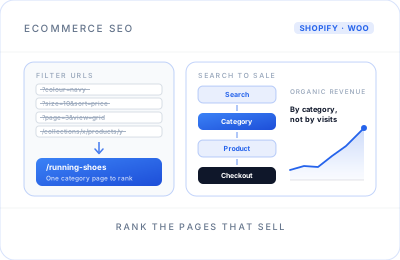
Size, colour and price filters that help shoppers without creating thousands of near-identical URLs for Google to crawl and choose between.
Product Schema & Merchant Listings
Product structured data and a Merchant Center feed that agree with each other, so price, availability and ratings can appear in search results and free Shopping listings.
Out-of-Stock Handling
Clear rules for temporary stock-outs, discontinued lines and seasonal ranges, so rankings built up over years aren't thrown away with the product.
Internal Linking
Breadcrumbs, related categories, buying guides and “shop the range” links that send authority to the pages that make money, not the ones that don't.
GA4 Ecommerce Reporting
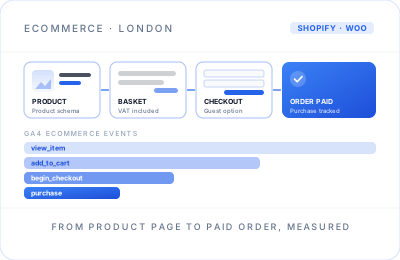
Revenue, conversion rate and order value by organic landing page, with the view_item, add_to_cart and purchase events checked first so the numbers can be trusted. If your ecommerce tracking is broken, that gets fixed before any SEO decision is made.
Shopify and WooCommerce go wrong in different ways.
Neither platform is “bad for SEO”. Each has its own habits, and knowing them saves weeks of guesswork.
| Shopify | WooCommerce | |
|---|---|---|
| URL control | Fixed /products/ and /collections/ prefixes that can't be removed | Full control over permalinks, category bases and slugs |
| Duplicate products | Products reachable inside collection paths; theme links should point to the canonical product URL | Attribute and tag archives can multiply thin listing pages |
| Filters | Collection filters add parameters; demand-led filters work better as their own collections | Filter plugins generate parameter URLs that need crawl and index rules |
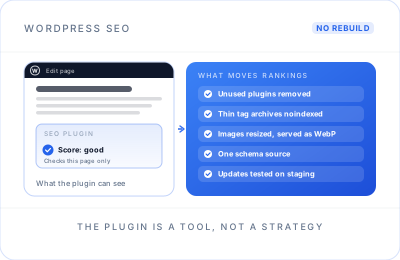
| Schema | Theme markup is often incomplete, and apps can add a second, conflicting copy | WooCommerce and SEO plugins can both output product markup; one source must win |
| Speed | Scripts from installed and uninstalled apps pile up | Hosting, plugin weight and cart scripts on every page |
| Content | Blog is basic; buying guides need careful templates | WordPress is strong for guides and editorial content |
Planning a new store or a replatform? See ecommerce website design, where SEO is built in before launch. For WooCommerce, much of my WordPress SEO work applies too.
Revenue data first, then the pages that move it.
Revenue Audit
GA4 and Search Console joined up: which categories and products earn from organic search today, and where demand is going unmet.
Search-to-Category Map
Every important search matched to one page, so categories stop competing with each other and gaps become new collections.
Technical Clean-Up
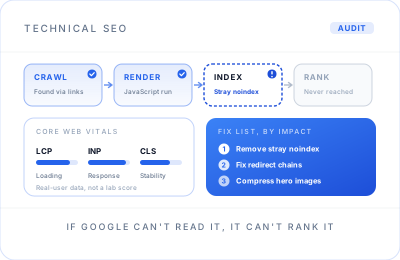
Filters, canonicals, variants, schema, feeds and speed fixed in order of revenue impact, with a crawl before and after.
Category & Product Content
Top categories improved first, then best-sellers' product pages, then buying guides that link back into the ranges.
Links That Fit Retail
Brand and stockist pages, gift guides, supplier features and genuine press. Earned, relevant links rather than bought ones.
Revenue Reporting
Organic revenue, orders and conversion rate by category, compared with last month and last year, with next month's priorities.
Out of stock, discontinued or seasonal: the rules I use
Deleting a product page is the fastest way to lose rankings it took years to earn. Before anything is removed, I check whether the page has traffic, links or sales history, then apply one simple rule set:
- Coming back: keep the page live, mark it out of stock in the structured data, and show alternatives or a back-in-stock alert
- Replaced by a newer model: 301 redirect to the replacement
- Gone for good, with links or traffic: redirect to the closest category, or keep an informative page
- Gone for good, with no links or traffic: let it return a 404
- Seasonal ranges: keep the category URL year-round and update it, rather than creating a new one each year
Enterprise ecommerce, measured in conversions.
At Philip Morris International I led global ecommerce performance monitoring, a GA4 migration and a standardised KPI framework across 50+ markets, delivering +15% global conversion. At GSK, an analytics-led programme across 15+ brand sites mapped 70%+ basket abandonment; guest checkout and a mobile-first rebuild delivered a 20% conversion lift worth £35,000 a month. That was analytics and conversion work rather than SEO, and it's exactly why I judge ecommerce SEO by what it sells.
Ecommerce SEO in London for shops that want sales, not sessions.
London has thousands of independent brands selling online, from fashion labels and homeware studios to skincare, coffee and specialist food. Most compete with national retailers and marketplaces for the same searches. You rarely win that fight with more blog posts. You win it with category pages that match the exact way people search, product pages that are more useful than the marketplace listing, and a site Google can crawl without wading through thousands of filter URLs.
Good ecommerce SEO is part merchandising, part technical and part measurement. The merchandising side decides which ranges deserve their own pages. The technical side, which overlaps heavily with technical SEO, keeps variants, filters and feeds under control. The measurement side, backed by proper GA4 ecommerce tracking, tells you whether any of it is producing orders.
The order of work matters as much as the work itself. I start with the categories that already earn from search and could earn more, because gains there show up in revenue soonest. Product page improvements follow for your best-sellers, then buying guides and gift content that link back into the ranges. Nothing is done just because a tool flagged it; every task is ranked by its likely effect on sales.
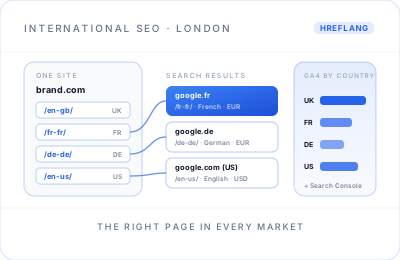
If you sell into more than one country, currencies, hreflang and market-specific catalogues add another layer; that is covered under international SEO.
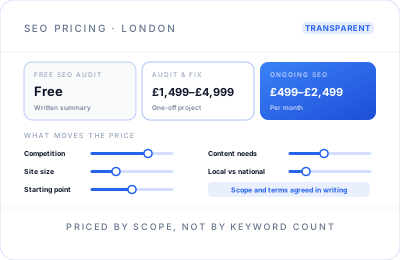
I work remotely with online shops across London and the UK, directly and without account managers in between. Ongoing ecommerce SEO typically runs £499 to £2,499 a month depending on catalogue size and competition; see SEO pricing for how that is scoped, or start with a free SEO audit of your store.
Ecommerce SEO questions.
Categories, filters, stock, platforms and cost.
An online shop has far more pages, most of them generated automatically: categories, products, filters, variants and pagination. The work is less about writing articles and more about deciding which pages deserve to rank, preventing duplicates and making product data clear to Google. Success is measured in revenue from organic search, not visits.
Usually category pages first. They match broader searches such as running shoes for women, which carry more volume and buying intent, and they stay live while individual products come and go. Product pages matter for specific model and brand searches, so they still need unique descriptions and accurate schema.
Decide which filter combinations have real search demand, such as a colour or brand people actually search for, and turn those into proper indexable pages. Keep the rest out of the index with canonical tags or noindex, and stop crawlers wasting time on endless parameter combinations. The right mix depends on your platform.
If the product is coming back, keep the page live, mark it out of stock in your structured data and offer alternatives or a back-in-stock alert. If it is gone for good, redirect it to the closest replacement or its category. Only let it return a 404 if it has no links or traffic.
Both can rank well. Shopify is simpler to keep fast and secure but fixes some URL structures, such as the /products/ and /collections/ prefixes. WooCommerce gives full control over URLs and content but needs more care with hosting, plugins and speed. The better choice depends on your catalogue, your team and your budget.
Ongoing ecommerce SEO typically costs £499 to £2,499 per month, depending on catalogue size, competition and how much content and technical work is needed. Large catalogues with filter and duplication problems often start with a one-off technical audit and fix, typically £1,499 to £4,999, before monthly work begins.