 Enterprise · Analytics
The headline numbers. At a glance.
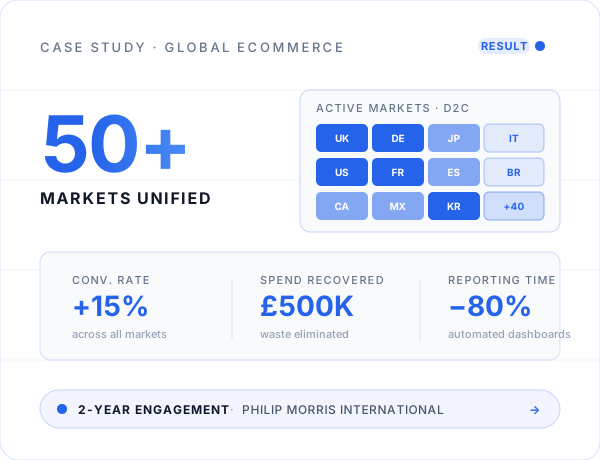
50+
Global markets monitored
2 yrs
Engagement duration
What needed solving.
A global consumer brand operating D2C across 50+ markets needed consistent ecommerce performance monitoring, optimisation and reporting. Analytics were fragmented, KPI frameworks were inconsistent across regions and the business was mid-migration from GA Universal 360 to GA4 — with no clear owner.
The work. In their words.
Established a standardised KPI framework across all global markets
Built automated dashboards for real-time performance monitoring
Facilitated monthly performance reviews with regional and channel teams
Led full GA Universal 360 → GA4 migration including new report setup and KPI configuration
Delivered impact analysis on product launches and feature rollouts
Forecast performance against global objectives via channel mix analysis
Trained new team members and interns on GA4
Platforms and tools used.
Outcomes. That mattered to the business.
15%
Improvement in global conversion rates
£500k+
Wasted media spend identified & reallocated
80%
Reduction in manual reporting time
GA4
Migration delivered across all markets on time
Common questions.
What the engagement involved, how the numbers were arrived at, and whether the method transfers.
A two-year engagement covering global ecommerce performance across more than fifty markets. The work included migrating from Google Analytics Universal to GA4, building a standardised KPI framework that every market reported against, and creating automated dashboards for both regional and central teams.
By making performance genuinely comparable across markets for the first time. Once every market measured conversion the same way, the underperformers became obvious and the fixes became specific: checkout friction in some markets, traffic quality in others. The uplift came from acting on that clarity.
Standardised tracking exposed spend going to channels and markets that produced traffic but almost no conversions. Without a common measurement framework that waste was invisible, because each market reported success differently. The figure represents annualised media that could be reallocated to what was working.
The scale is not, but the method is. The same discipline — agree what you measure, measure it consistently, then act on what it shows — works identically for one website. Most small businesses have exactly the problem PMI had, just at a smaller size.
It ran across the two-year engagement rather than as a single cutover, because fifty-plus markets could not move at once. Sequencing market by market, with parallel tracking during each changeover, is what kept historical reporting usable and stakeholders confident throughout.