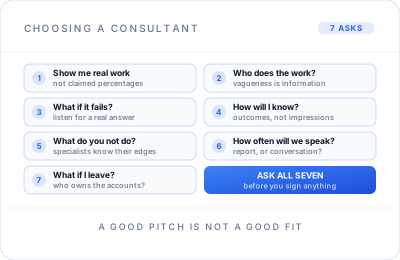
Most businesses pick a consultant based on a good pitch. Few ask the questions that actually predict whether the relationship will work.
That is understandable. You are busy, the work can sound technical, and every provider seems confident. But a little healthy scrutiny before you commit can save a lot of time, money and frustration afterwards. Here are seven questions worth asking before you sign anything.
1. “Can you show me an example of work you have actually done, not just results you have claimed?”
Anyone can put an impressive percentage increase on a slide. The better question is how they got there. Ask to see an anonymised dashboard, a before-and-after example, a strategy document, or the reasoning behind a recommendation.
You are not looking for confidential client data. You are looking for evidence that the person understands the work beneath the headline result. If they cannot explain their approach or show how they reached a decision, be cautious.
2. “Who will actually be doing the work?”
With agencies especially, the person who pitches you is not always the person who executes. That does not make the model wrong, but you deserve to know who will be responsible for the strategy, implementation and day-to-day decisions.
Ask directly. Will you work with a senior specialist, an account manager, a junior delivery team, or a combination? If the answer is vague, that is useful information before you commit.
3. “What happens if this does not work?”
Digital work does not always go exactly as planned. A campaign may not convert, a technical change may reveal a deeper issue, or an assumption in the original plan may turn out to be wrong.
A confident, honest consultant should have a real answer: how they test, how they report a problem, when they change direction and how they help you decide what happens next. How someone talks about failure often tells you more than how they talk about success.
4. “How will I actually know if this is working?”
The answer should connect to your real business outcome: qualified enquiries, booked calls, sales, revenue, repeat purchases or another measure that genuinely matters to you. It should also explain how the result will be tracked.
Be wary of an answer built only around activity metrics. Impressions, reach and clicks can be useful signals, but they are easy to report and easy to hide behind. They are not a substitute for understanding whether the work is moving the business forward.
5. “What do you not do?”
Anyone claiming to be equally brilliant at SEO, paid media, email, social, web design, analytics and every other discipline is either exceptional or overstretched. Most strong consultants have clear areas of depth and are honest about where their strength tapers off.
A good answer may include trusted partners for work outside their core expertise. That is often a positive sign: it shows they are protecting the quality of your outcome rather than trying to hold on to every part of the budget.
6. “How often will we actually speak, and how?”
Some engagements mean monthly reports landing in your inbox with little real conversation. Others involve direct, regular contact with the person doing the work. Neither approach is automatically better, but you should know which you are getting.
Ask about the rhythm of the relationship: scheduled calls, response times, reporting, urgent issues and who you contact if priorities change. The right answer is the one that gives you enough visibility and access for the way your business operates.
7. “What happens to the work if I want to leave?”
Do you own the ad accounts, analytics properties, data, creative files, website assets and documentation? Or are they locked into the consultant’s or agency’s own systems?
This matters more than most businesses realise until they try to leave. You should be able to take ownership of the assets you have paid to build, and the handover process should be clear before the work starts — not a difficult conversation at the end.
Why I am comfortable being asked these
I would rather a prospective client asked me all seven of these questions directly than made a decision based on a polished pitch. The right working relationship should stand up to honest questions.
If you are currently weighing up who to work with, a discovery call is a good place to ask them. No obligation either way.
Looking for a consultant who will answer honestly?
Book a discovery call and ask whatever you need to ask. I will give you a clear view of how I work, what I can help with and whether I am the right fit.
Book a Discovery Call