Before I ever looked at a dashboard
Before I ever looked at a GA4 dashboard, I watched my father run a grocery store in Mumbai.
I remember it as a busy, practical place: shelves packed closely, familiar brands sitting alongside local favourites, and customers who often did not need to explain what they wanted. My father seemed to understand the rhythm of the neighbourhood without ever calling it customer insight. He knew what people bought at the end of the month, what they asked for before festivals, and which products would be missed if they were not there.
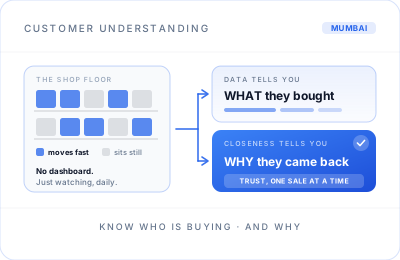
At the time, I just saw a grocery store. Looking back, I can see a business built on observation, trust and hundreds of small decisions made close to the customer. No dashboard. No reports. Just a daily understanding of the people walking through the door.
What I noticed, even as a kid
Some products moved quickly. Others sat on the shelf for weeks, no matter how recognisable the brand or how attractive the packaging looked. My father did not need a spreadsheet to spot the difference. He noticed what people asked for, what they came back to buy, and what they quietly ignored.
Regular customers mattered too. They were not simply repeat transactions; they were relationships. My father knew their preferences, noticed when their habits changed, and made sure they felt recognised. That kind of attention made people return, even when they had other options.
I also started to see that a bigger name did not automatically win. A smaller or local product could earn loyalty if it was better, more familiar, more useful, or simply trusted by the people buying it. The shelf was competitive, but the customer always had the final say.
The lesson that took me twenty years to fully understand
The lesson is simple, although it took me a long time to put it into words: trust is built one transaction at a time.
Data can tell you what people bought, where they clicked and when they left. That is valuable. But data alone cannot always tell you why someone chose one brand over another, why they came back, or what made them hesitate. For that, you need to stay close to the customer.
A corner-shop owner has no choice but to understand this. Every decision is visible. Stock the wrong things, make customers feel unseen, or lose their trust, and the business feels it quickly. Larger brands can sometimes get far away from that reality. The dashboards become more sophisticated, but the fundamentals do not change.
The best brands do not treat customer understanding as a slide in a strategy deck. They make it part of how they work. They listen carefully, spot the small signals, and use data to deepen their understanding rather than to replace it.
Why this still shapes how I work
The businesses and brands I have worked with since — Philip Morris International, GSK and Unilever — are a world away from a Mumbai grocery store in terms of scale. But the underlying instinct is the same one my father had: know who is actually buying, and why.
That is still the first question I ask on any engagement, whether it is with a global brand or a growing business finding its feet. Not simply “what does the dashboard say?”, but “what does the customer actually need?”
Data matters. Measurement matters. But both become more useful when they are rooted in a real understanding of the people on the other side of the transaction. The numbers can show you what happened. Customer understanding is what helps you decide what to do next.
It is an approach that has stayed with me from that grocery store in Mumbai to every piece of work I do today: start with the customer, earn their trust, and let everything else follow from there.
Looking for a more customer-first view of your marketing?
If that instinct is something you are looking for in how your business approaches its customers, I would be glad to talk it through.